Understanding the Sizes : 1 – Earth and Moon

In everyday life, we don’t stop to think about the ‘sizes’ of the planet we live in, the Solar System, and the galaxy (Milky Way) in which we orbit with our mothership, Earth.
In a series of insights, we aim to understand the distances and some parameters that characterize these systems. This first one concerns the Earth and its satellite, the Moon (Figure 1).


Figure 1 -the Earth and the Moon
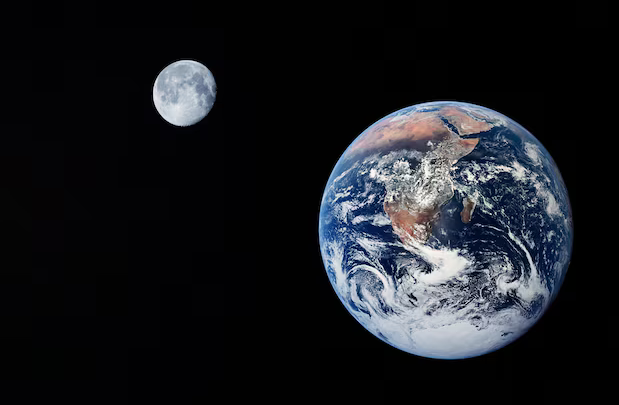
Earth_Moon


The average radius of the Earth (slightly smaller at the poles than at the equator) is approximately 6,370 km, meaning its circumference is approximately 40,000 km. Therefore, an electromagnetic signal traveling at 300,000 km/s would circle the planet 7.5 times in one second.

Here are some interesting measurements to compare:

– The thickness of the troposphere, where virtually all meteorological phenomena occur and almost all water vapor is concentrated, varies from about 8 km (at the poles) to about 20 km (at the equator), or, on average, 14 km. That is, if the Earth were the size of a soccer ball (radius about 11 cm), the troposphere would be roughly the thickness of two sheets of paper (about 0.24 mm).

– The highest mountain (Everest, about 8.8 km) and the deepest ocean (Mariana Trench, about 10.9 km) are of the same order of magnitude as the height of the troposphere. As if to say that if you held that soccer ball in your hand you would almost not notice their presence.

– The Moon, which has a radius of 1,737 km, would be slightly smaller than a tennis ball (radius about 3 cm) compared to the soccer ball sized Earth, see Figure 2. Its average distance from Earth is about 380,000 km, so an electromagnetic signal takes about 1.3 seconds to arrive; in the proportions calculated for the balls, the distance between them would be about 6.5 meters.


Figure 2 – Soccer ball and tennis ball in the proportions of Earth and Moon

balls


– The altitude at which airliners fly, about 10 km, is little more than the thickness of a sheet of paper. Seen from space they appear to crawl more than fly. The International Space Station (ISS) is maintained at an altitude of about 400 km, about 7 mm above the soccer ball, at a speed of about 28,000 km/h, or it would move about 8 mm per minute.

– Considering the Earth’s rotation in 24 hours, the tangential velocity of a point at the equator is almost 1,700 km/h; at our latitudes of about 45°, the speed is just under 1,200 km/h. For this reason, spacecraft launch pads are positioned at low latitudes, near the equator, to take advantage of the higher linear velocity. The escape velocity required to overcome gravitational pull (about 40,000 km/h on Earth) is more easily achieved by exploiting the velocity of the launch point (with a starting direction toward the east for maximum effect, considering that the Earth rotates towards the east and the speeds can add up).
Note that escape velocity is not tied to ‘up’; it’s the minimum speed at a given altitude to be unbound, in any direction, as long as you don’t collide with the planet.


Next episodes:
Understanding the Sizes : 2 – Solar System
Understanding the Sizes : 3 – Milky Way
Understanding the Sizes : 4 – galaxy clusters and beyond
please, rate this post

How empty is matter?

Very empty.
Extremely empty.

Let’s consider the elementary constituents, atoms, which then aggregate into molecules to form the matter we know. They consist of a nucleus that represents almost the entire mass, in the form of positively charged protons and neutrons with almost equal mass to protons but without charge, and very light (1/2000 the mass of the proton) negatively charged electrons that ‘orbit’ around the nucleus. Under normal conditions, the electric charges of the protons and electrons of the ‘neutral’ atom balance each other out. All aggregations between atoms occur thanks to the forces of attraction between different charges, whereas, as we know, equal charges repel each other, as is the case with magnetic forces. In the nucleus, protons, although they have the same positive charge and repel each other, are held together by an extremely strong force called the strong nuclear force.


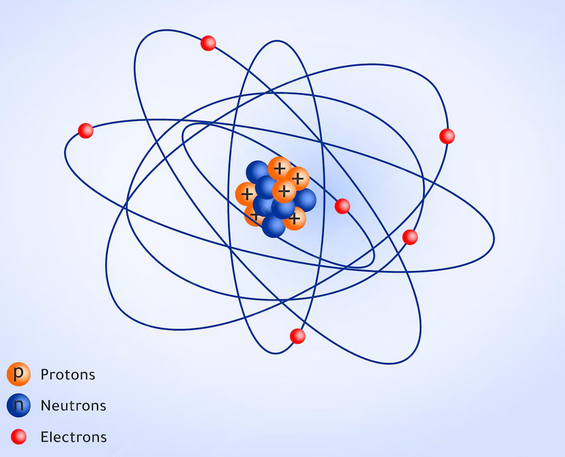
Figure 1 – example of a very imprecise diagram of an atom (source: freepic.com)

false atom


Figure 1 is a typical example of a misrepresentation of an atom, for many reasons, but two are primary: the particles are not ‘balls’ but probability densities, that is, ‘elongated clouds’ rather than ‘balls’; the proportions are monstrously misleading.
This brings us to the topic of this post.
Let’s consider the smallest and simplest atom, the neutral hydrogen atom H (consisting of 1 proton and 1 electron), and the neutral iron atom Fe (the most common isotope is composed of 26 protons, 30 neutrons and 26 electrons). The mass of Fe is therefore about 56 times that of H.
For atomic measurements, we use angstroms (Å, named after the Swedish physicist Anders Jonas Ångström, 1814-1874), equal to one-tenth of a billionth of a meter (10¯¹º m).
We also consider only the nuclei and the minimum distance of the electrons from the nucleus, that is, the radius of their innermost orbit (so the ‘size’ of the entire atom is much larger).
Some actual measurements of these particles are approximately as follows:

AtomNucleusMin distance electronsΔ
H1,7 · 10-5 Å (0,000017 Å)0,5 Å~2.9 · 104
Fe5 · 10-5 Å (0,00005 Å) 1,25 Å~2.5 · 104

So between the nucleus and the innermost orbit of the electrons there are about four orders of magnitude! This is empty space. Obviously, there are electric fields holding everything together, but there are no massive particles, bound or not, in that space, and there can’t be any in any atom, under normal conditions of matter.

Four orders of magnitude means that if the Fe nucleus were the size of a plum (5 cm), there would be empty space up to 1250 meters away. For H, if the nucleus were the size of a grape (17 mm), there would be empty space up to 500 meters away.

What allows matter to be bound in the solid state are the electrical binding forces between atoms, due to the presence/absence of electrons in outermost atomic shells, but that’s another story.
These empty spaces compress only under extreme conditions, for example when matter degenerates in stars that transform into white dwarfs or neutron stars (when the outward force of radiation ceases and gravity compresses the star), reaching unimaginable densities (a grape would have a mass of billions of tons). But that’s another story, too.

please, rate this post

Olbers’ paradox and the dark night sky

Why is the night sky dark?
If universe were infinite, eternal, and static, as Giordano Bruno (1548-1600) claimed, as did cosmology until the early 20th century, adding that it is also populated by stars in a homogeneous manner, the night sky should be bright and not dark. This contradiction was already noted by Johannes Kepler (1571-1630) in 1610 in Dissertatio cum Nuncio Sidereo.
However, the principle was clearly formulated in 1826 by Einrich Wilhelm Olbers (1758-1840), who mathematically demonstrated (see below, optional reasoning which can be skipped) why the night sky should shine according to the cosmology of the time, highlighting a paradox with respect to observation.

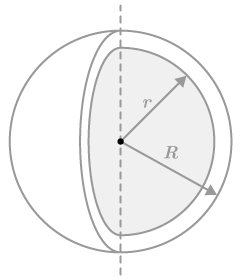
Imagining the universe as consisting of spherical shells concentric with respect to our point of observation (see Figure 1), the intensity of radiation received (flux  f ) from a source ( L ) at a distance ( r ) is inversely proportional to the square of the distance:
[1]    f = L / 4 π r²
The number of sources contained in the shell is proportional to the volume, which increases with the square of the distance (by infinitesimal increments
dr = R – r  with reference to Figure 1):
[2]    dn ∝ dV ≈ 4 π r² dr
Therefore, the effects of [1] and [2] compensate each other and each shell contributes with the same intensity, regardless of distance.
The infinitesimal intensity ( dI ) coming from the infinitesimal shell, multiplying [1] and [2], is:
[3]    dI = f dn = n L dr
Integrating [3] gives the total intensity:
[4]    I =∫₀ᴿ n L dr = n L R
Therefore, for  R → ∞, the intensity [4] should become infinite. So something is wrong with the reasoning (hence the paradox).


Figure 1 – sketch of a spherical shell

spherical shell


The observation of the dark night sky is explained in modern terms (based on cosmological standard model) because the universe has existed for a finite time (Big Bang hypothesis) and is expanding (interpretation of the redshift of radiation from remote sources).
In the first case, it is considered that the light from remote sources, which has a finite speed, simply has not reached us yet.

In the second case, redshift, or the shift of light towards longer wavelengths (for example, in the infrared band, beyond the range visible to the eye), prevents the observation of remote sources.
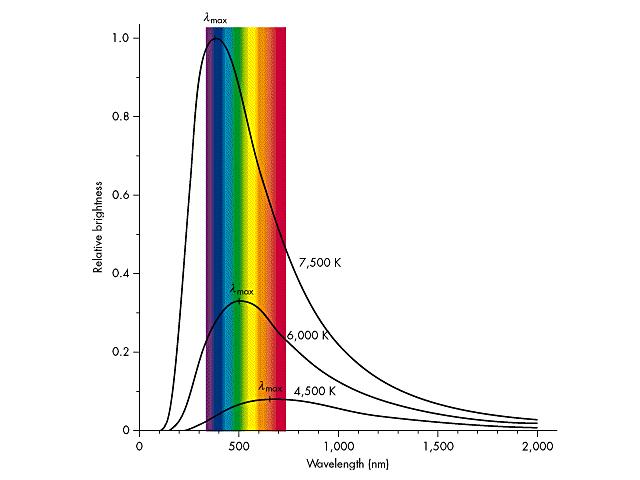
It should also be remembered that the distribution of the intensity of radiation from stellar sources follows a Planckian curve (see Figure 3), which has its maximum in the visible light band. In other words, there are no significant intensities of radiation in a typical stellar source that, moving due to the effect of redshift, could affect this visible band.
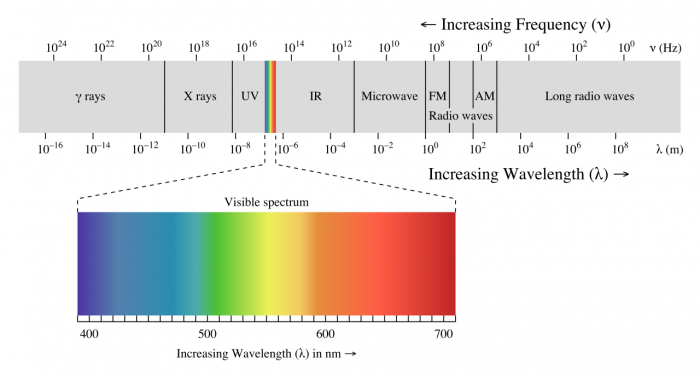
In fact, we emphasize that the range of radiation visible to our eyes is very small compared to the entire spectrum of radiation, as shown in Figure 2.
In reality, redshift alone would explain the dark night sky, even if the universe were infinite and without assuming a Big Bang. And even without expansion, if the observed redshift had a different cause.


Figure 2 – full spectrum of radiation with visible band

fulll spectrum


Figure 3 – A sketch of a Planckian functions of brightness (intensity of radiation emitted per unit solid angle) for stellar sources with different surface temperatures. That of the Sun is approximately 5700 K.

blackbody

please, rate this post

The Rayleigh scattering and the blue sky

Why is the daytime sky blue?
We need to examine a type of scattering that affects photons from solar radiation when they interact with the molecules that make up the atmosphere, namely nitrogen and oxygen (99% of the components).
This is Rayleigh scattering (named after Nobel Prize winner John William Strutt Rayleigh, 1842-1919), which affects particles smaller than the wavelength of the incident radiation. It is an elastic scattering, so the wavelength of the same radiation is not changed.
We are dealing with photons, but the formula was developed on the basis of classical electromagnetic theory, not quantum theory (which was created after Rayleigh’s death).


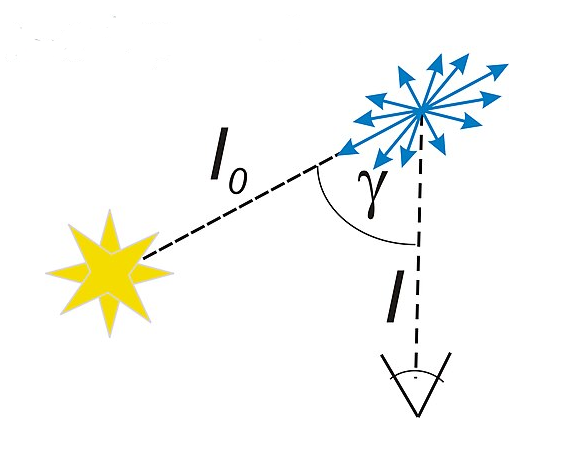
Figure 1 – Angular dependence of Rayleigh Scattering
(copyright MLisandra, CC BY-SA 4.0, via Wikimedia Commons, here without the formula inscription)


For the explanation we are looking for, the Rayleigh scattering formula can be simplified as follows (see also Figure 1):
[1]    I ~ I₀ (1+cos²γ) / λ⁴
where  I  is the intensity of the scattered radiation,  I₀  is the intensity of the incident radiation with wavelength  λ ,  γ  is the scattering angle of the incident radiation.

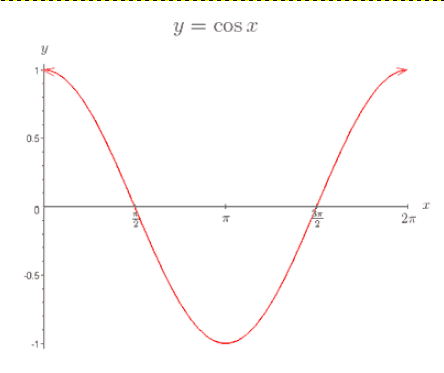
We can immediately see that the angle where the intensity  [1]  is lowest is the right angle ( π/2 ), where the cosine is zero (see Figure 2), meaning that the sky is darkest (the blue is most intense) at an angle of 90° to the direction of the Sun.
Furthermore, the dependence on the inverse of the fourth power of  λ suggests that the effects for different wavelengths are significantly different. In fact, blue light is scattered much more than red light, which has a longer wavelength (see Figure 3), making the sky blue. Even shorter wavelengths, such as those of violet, are less intense at source and do not contribute significantly.
At dawn and dusk, blue light is highly scattered by the greater layer of atmosphere it passes through, together with yellow and green light, so red/orange light dominates.

In the case of smaller particles, the cross section and refractive index of the particle are considered, but even if atmospheric gas molecules are treated as point sources, in this case the effects depend on their polarizability due to incident radiation. Those who take photographs using a polarizing filter are familiar with this phenomenon: in fact, by adjusting the filter effect and therefore the polarization, the sky can even become completely black at 90° to the Sun, which can be creative but not very realistic!


Figure 2 – cosine function behaviour

cosine function

Figure 3 – visible band of radiation

visible band of radiation


See also Mie scattering and white clouds.

please, rate this post

Eddington luminosity and limits to stellar growth

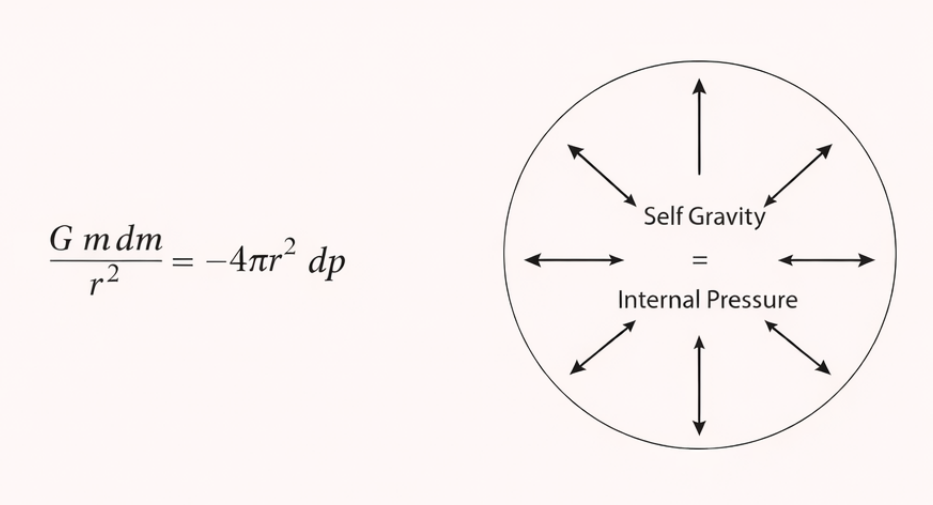
The Eddington luminosity (Lₑ) (named after Arthur Stanley Eddington, 1882-1944), also known as the Eddington limit, is the growth limit of a structure that is in hydrostatic equilibrium (see Figure 1), balancing the outward radiation pressure with the inward gravitational pull.


Figure 1 – Hydrostatic equilibrium


The relationship for the luminosity limit can be easily derived, obtaining:
[1]    L ≤ 4π c G M / k = Lₑ
where  G  is the universal gravitational constant,  M  is the mass of the object,  c  is the speed of light, and  k  is the opacity (ability to absorb radiation) of the material that makes up the object.
As a function of solar parameters, in the case of the model consisting of ionized hydrogen, [1] can be expressed as:
[2]    Lₑ ≈ 3.2 * 10⁴ (M/M๏) L๏
where   M๏   and   L๏   are the mass and luminosity of the Sun.

In the very hot core of massive stars (or in accretion disks of black holes), opacity is independent of frequency and temperature, is related to Thomson scattering (see Thomson scattering on Wikipedia for more informations) of free electrons, and can be expressed as:
[3]    kₑₛ = σₜ nₑ / ρ
where σₜ is the Thomson cross section for electrons, nₑ is the number density of electrons, and  ρ  is the density of the medium.
To consider the more general case of models also consisting of helium and metals, the general relationship is expressed as a function of the mass fraction (X) of hydrogen, and the  [3] becomes:
[4]    kₑₛ = σₜ (1+X) / 2 mₚ ≈ 0.2 (1+X)    cm² / gr
where  mₚ  is the mass of the proton.
Therefore, in the case of a model consisting only of helium, Eddington luminosity would double (with   X=0 ,  [4]  is halved and  [1]  is doubled).
Relationships can also be derived for cases of models that are not fully ionized or colder (for less massive stars), or for highly energetic radiation (e.g., gamma rays as in black hole accretion disks), but these are beyond the scope of this note.

What is notable is that this physical limit explains why we do not observe infinitely large stars; beyond a certain mass limit, the luminosity is such that it disrupts the star.
The Eddington luminosity also defines the maximum rate at which a black hole can grow: if matter falls too quickly, the light emitted repels it back.

please, rate this post

Snell’s law and the causes of refraction

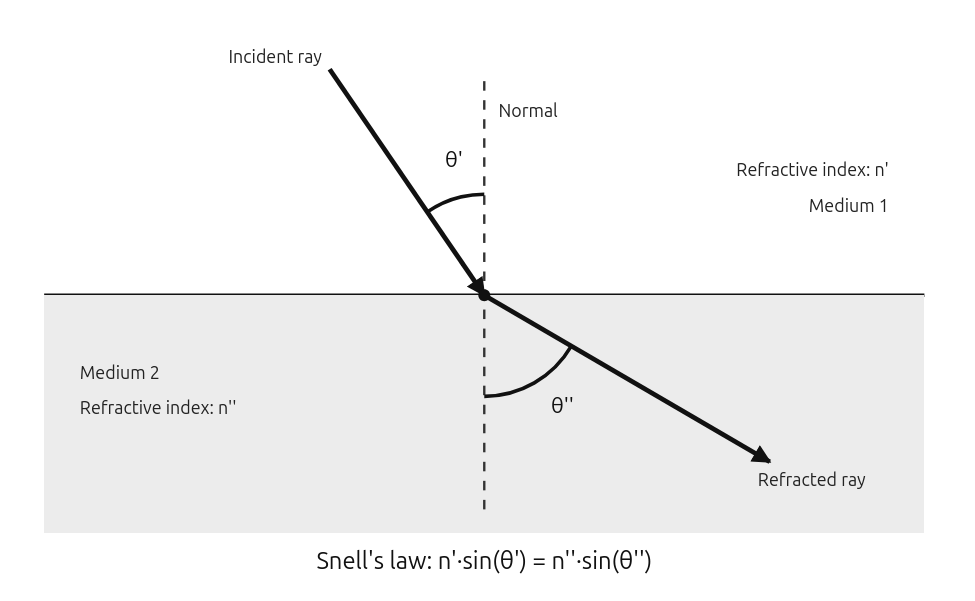
Let us recall Snell’s well-known law, which describes the phenomenon of refraction:
– a ray of light undergoes a deviation when it passes from one transparent medium to another with a different refractive index (see Figure 2).


Figure 1 – Snell law


Figure 2 – Refraction example


Mathematically (see Figure 1):
[1]    n’ sin(θ’) = n” sin(θ”)
where  n’ ,  n”  are the refractive indices of the two transparent media,  θ’ ,  θ”  are the angles of incidence and refraction (measured relative to normal at the interface between the media).
In other words, given two media, the ratio between the respective sines of the angles of incidence and refraction is constant.
A first proof can be obtained by applying Pierre de Fermat’s (1601-1665) principle of least time, namely that light follows the path that requires the least time to travel from one point to another. Attached below is the simple geometric-analytical proof (in italian):

pdf  Fermat_Snell_geometric-analytical demonstration

Okay, this relationship (perhaps already studied in the 10th century by the Persian mathematician Ibn Sahl) is certainly interesting, but what is the physical motivation for this constant quantity? It is necessary to identify where this regularity lies.
The reasons derive directly from Maxwell’s equations, the fundamental laws describing the interaction between electric and magnetic fields.
From these, it follows that the boundary conditions require that the tangential components of the electric field and magnetic field be continuous across the separation surface. Therefore, the phase of the incident, (reflected,) and transmitted wave must be the same along this boundary.

The assumption that the frequency ( ν ) of the incident light remains constant (i.e., that it is independent of the medium in which it propagates) can also be understood by considering that if this were not the case, it would lose coherence as it crossed the surface between the two media, probably transforming the image observed through the separation surface into a uniform grey color, which is not observed.
Furthermore, since the energy associated with incident photons is  E = h ν , where  h  is the Planck constant, the same conservation of energy tells us that the frequency cannot change.
Quantistic note: this consideration refers to a single photon, which would change color (towards red) if it lost energy (phenomenon that does not occur for all observed refracted photons). Considering a beam of photons, however, it may be that the second medium causes absorption of the incident light, thus a decrease in total energy, but this concerns the entire beam that absorbs some photons completely and not the individual photons.

Considering the wave vectors  k’  (incident) and  k”  (refracted) associated with their respective phases, and equating their projections on the separation interface, we obtain:
[2]     k’ sin(θ’) = k” sin(θ”)
but  k = ω / v  , where  ω  is the angular frequency of the electromagnetic wave of the incident light,  v  is the velocity in the medium, and defining the refractive index  n = c / v  (derived from the constants  ε₀  and  μ₀  of the medium using Maxwell’s equations, where  c =  1/√(ε₀ μ₀)  ), from  [2]  we finally obtain  [1] .

please, rate this post

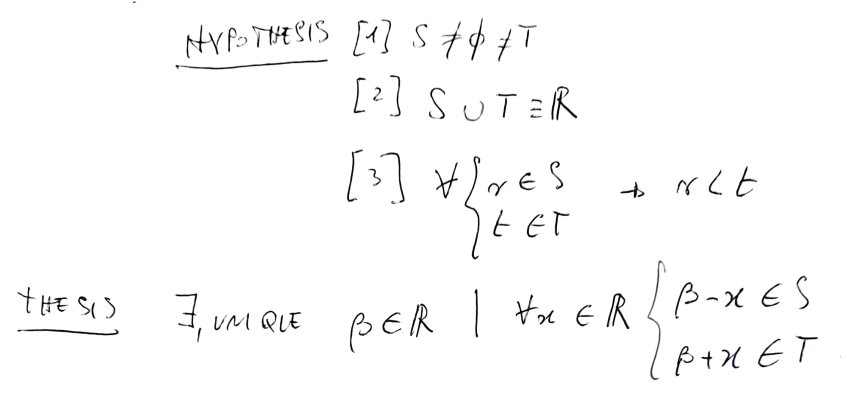
Dedekind’s theorem: a reconsideration of the demonstration

I had second thoughts about the draft proof already posted here.
Using a couple of theorems (called 1.1.3 and 1.1.8, attached), the proof becomes much simpler and more straightforward.
But I think I am justified in my oversight, as I studied these theorems so long ago that Tim Berners Lee had yet to invent the www   ; )

pdf_ita  Brussi 2026_Theorem_1.1.3 and 1.1.8

pdf_ita  Brussi 2026_Dedekind theorem 2


please, rate this post

Why do stars twinkle at night and planets do not?

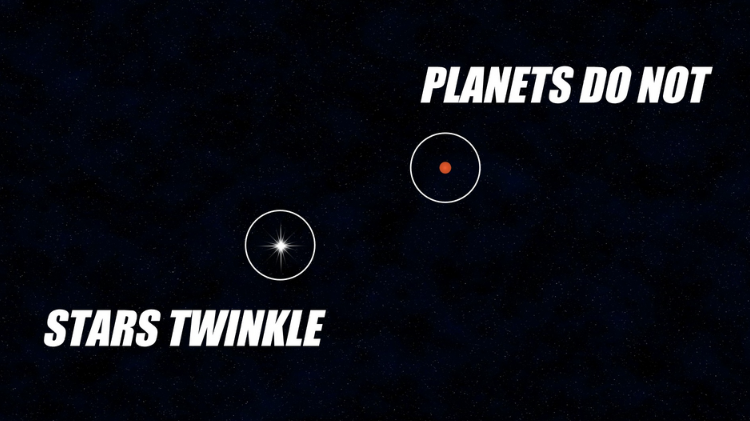
planets do not twinkle
This fact, known for millennia, allows even the layman to immediately distinguish in the night sky one of the planets of the Solar System (Venus, Mars, Jupiter, Saturn) from the stars with the naked eye.
These light sources, observed from the Earth’s surface, exhibit two main characteristic behaviors due to the same cause, atmospheric turbulence:
– slight oscillations in position (appreciable with good binoculars or a small telescope)
– intensity twinkling (typically only stars).
Other effects, especially when the source is close to the horizon, are: chromatic twinkling (color changes), atmospheric extinction (decrease in brightness), reddening, and twinkling of the planets.
Atmospheric turbulence at low altitudes (the first tens or hundreds of meters) is responsible for positional oscillations, together with turbulence at medium altitudes (6-8 km) where air cells of different temperatures and densities mix, while turbulence near the tropopause (8-12 km) associated with jet streams is responsible for scintillation.

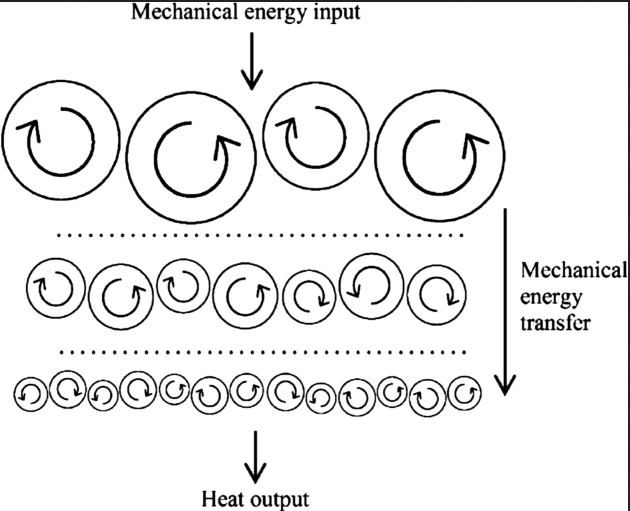
It is the optical dimensions of the sources that make the difference in the scintillation, based on their interaction with turbulence cells, which also vary in size. Jet streams determine large cells, ranging from tens to hundreds of meters, but turbulence follows Kolmogorov’s cascade model (see Figure 1), dissipating the initial kinetic energy into increasingly smaller vortices, down to the order of centimeters or millimeters, eventually dissipating into heat. It is precisely these microcells that deflect the point-like light from stellar sources, but they have a mediated effect in the case of optically larger sources such as planets, which involve multiple cells. The final effect is the stabilization of the source’s light, which therefore appears non-twinkling.


Figure 1 – An illustrative sketch of turbulence transformation according to Kolmogorov’s cascade model

turbolence

please, rate this post

An easy note on the chain rule in differential equations

The chain rule in differential equations is a small but powerful trick often used to derive composite functions by finding the derivative of the outer function while keeping the inner function unchanged.
For example, the expression  dy/dx  can be rewritten as:
[1]    dy/dx = dy/du * du/dx  .
In this way, we can obtain a derivative with respect to a variable that is more useful, for example because we know its value (possibly in a simpler formal expression, or already known), or is easier to integrate.
In simple terms, this means transforming the rate of change of  x  with respect to  y  into the product of the rate of change of  u  with respect to  y  and the rate of change of  x  with respect to  u .
Regarding rules for deriving functions, the chain rule leads to the proof that if  F(x) = f(g(x)) , its derivative is:
[2]    F'(x) = f'(g(x) * g'(x)  .

But while this rule for deriving functions is used every day without thinking about it, the chain rule can be a useful trick in solving many physics problems when we don’t know the direct rate of change between two variables.
A simple example of its use in astrophysics is in the study of star formation and Jeans’ Mass (the critical threshold required for a cloud of interstellar gas and dust to collapse under its own gravity to form stars). The chain rule is used to convert acceleration into a form that depends on position rather than time, making the differential equation integrable. In formal terms, as in  [1] , we can write:
[3]    d²R/dt² = dv/dt = dv/dR * dR/dt = v * dv/dR  ,
where  v = dR/dt  .
In this case, this substitution allows us to integrate the equation of motion with respect to radius  R  to determine the free-fall time of a collapsing gas cloud (off-topic calculation omitted).


collapsing gas cloud
Collapsing gas cloud(source accademiadellestelle.org)

please, rate this post

The equal sign “=”

Some considerations for true beginners.

The equal sign “=” is a mathematical symbol (coined by Welsh mathematician Robert Recorde in 1557) of two parallel horizontal lines used to show that two expressions have the same value or are identical.
It is taught very early on in elementary school, but I don’t think the power of its deep meaning is explained well. At least, that’s what we can see from the difficulties experienced by slightly older students.

Equal means exactly equal. What is on the left of the “=” sign has the same value as what is on the right. So if there is a symbol on the left and a number on the right, in that context that symbol is worth exactly the amount indicated. And if two symbols are equal, they can be used interchangeably. Trivial, but a source of great doubt for those who have not fully grasped the basic concept.

From a formal point of view, the equal sign satisfies the following conditions:
– Reflexive Property: any value is equal to itself,  a = a
– Symmetric property: if  a = b  then  b = a  (the order of the expressions can be swapped without changing the truth)
– Transitive Property: if  a = b  and  b = c  then  a = c

– Substitution Property: informally, this just means that if  a = b , then  a  can replace  b  in any mathematical expression or formula without changing its meaning; formally, for every  a  and  b , and any formula  ϕ(x)  with a free variable  x , if  a = b , then  ϕ(a)  implies  ϕ(b) ; we can call this a function application.

Even without going into further detail, these simple properties allow us, for example, to solve first-degree equations directly. They allow us to invert formulas simply by adding or multiplying the same quantity on both sides of the equation. OK, taking care not to divide by zero.
If the unknown quantities (the so-called variables) are of a higher degree, things get more complicated, but the effectiveness of “=” remains the same.
A powerful little trick based on this is to use new variables to replace more complicated expressions or those with higher powers.

please, rate this post