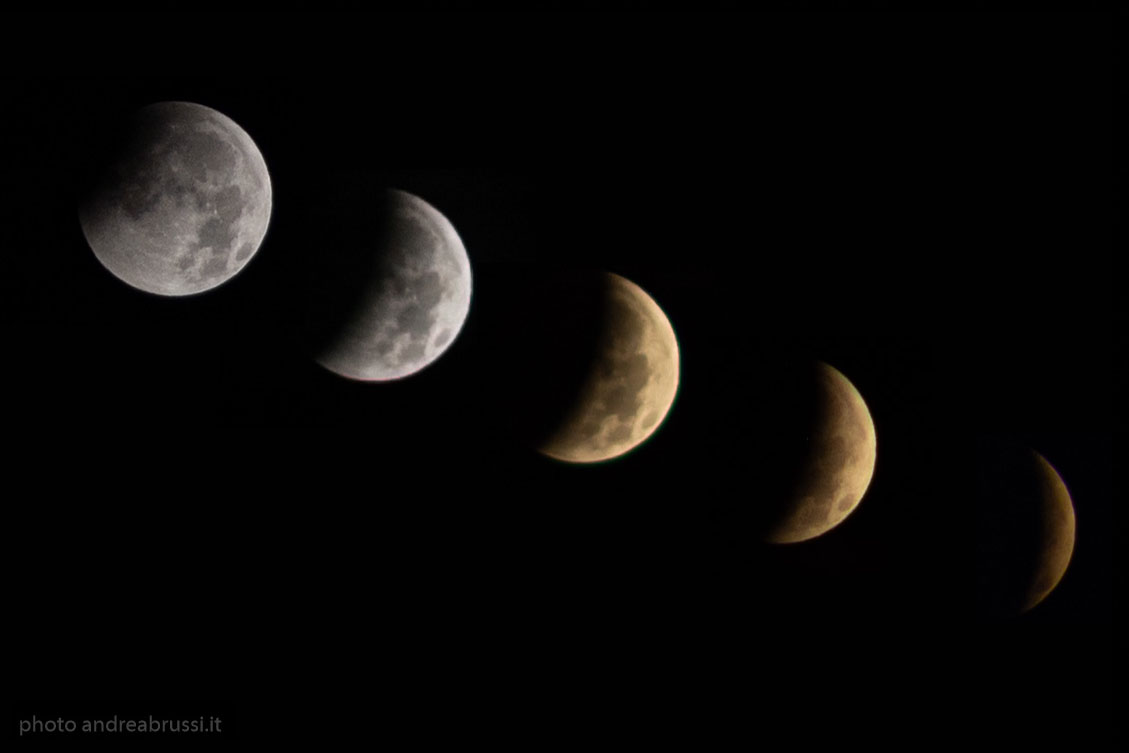
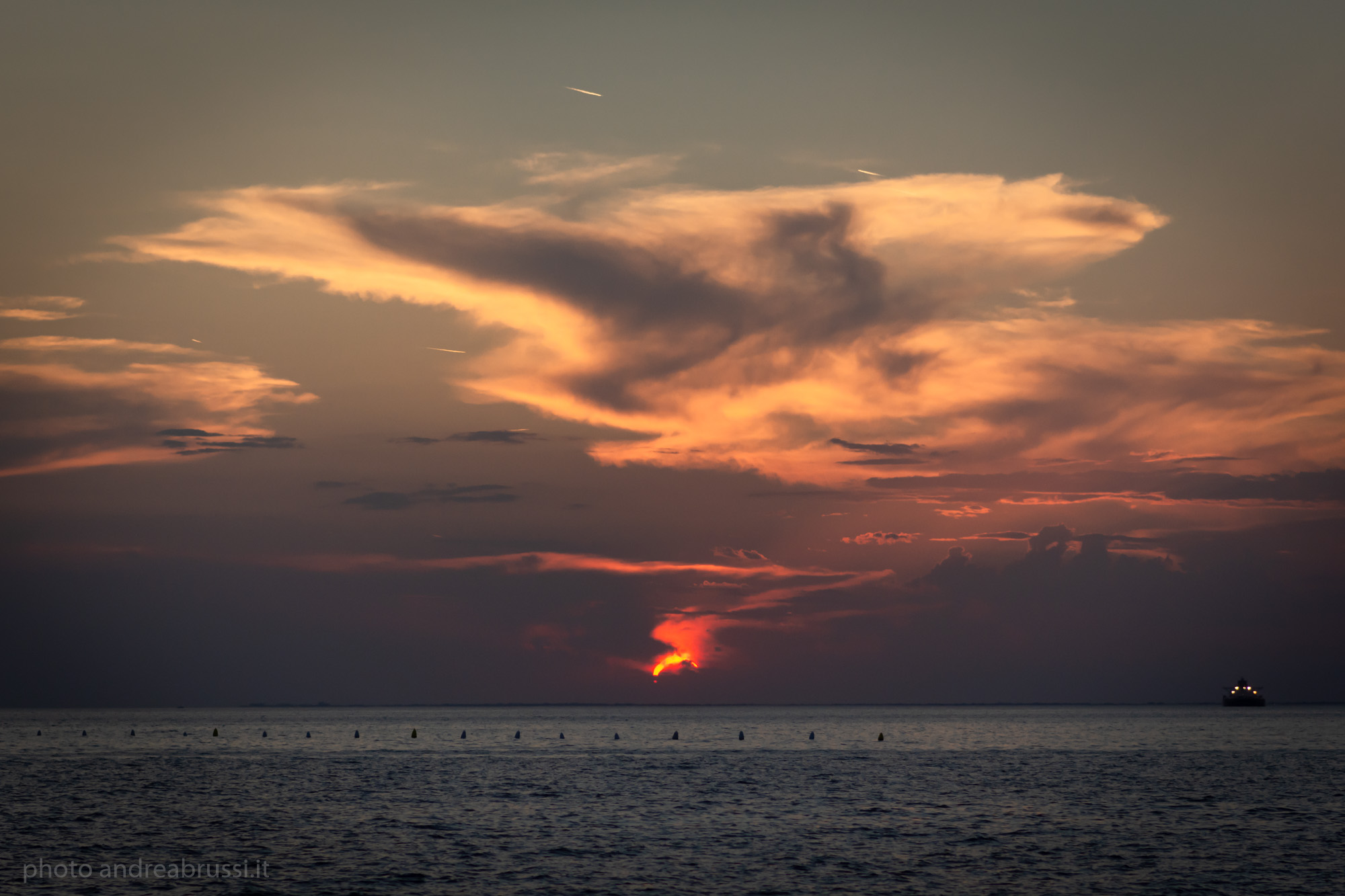
A very modest contribution to the last lunar eclipse taken with a normal reflex lens – Nikon D7200, Nikkor 85 mm f 1.8, in the province of Treviso (Italy). Unfortunately, the sky was slightly cloudy.
please, rate this post
My Science & Epistemology Researches
Posts related to observational astronomy, or simply sky observation.
A very modest contribution to the last lunar eclipse taken with a normal reflex lens – Nikon D7200, Nikkor 85 mm f 1.8, in the province of Treviso (Italy). Unfortunately, the sky was slightly cloudy.
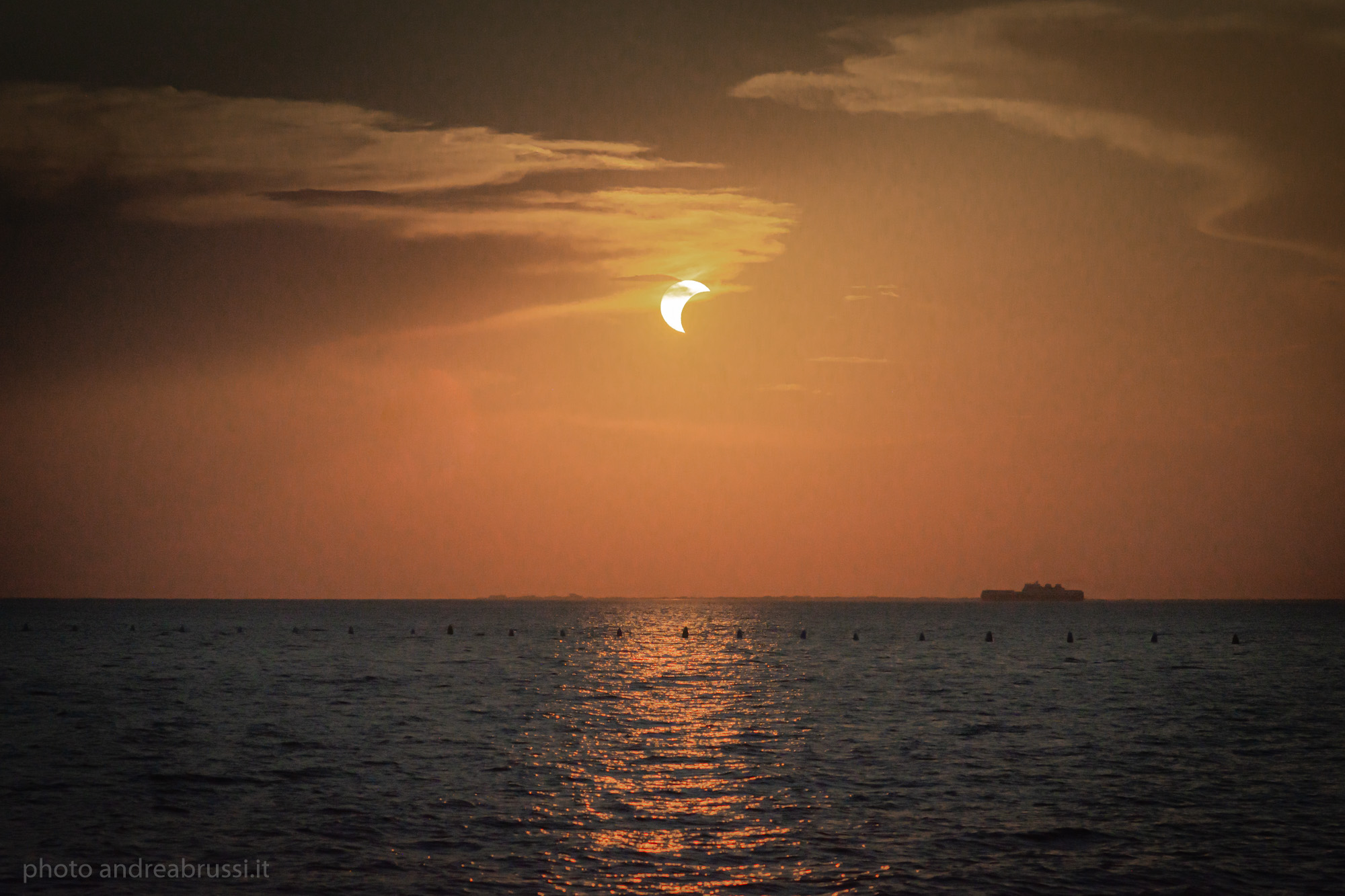
The clouds then prevented us from enjoying the sunset over the sea to the fullest (about 90%), but it was still exciting.
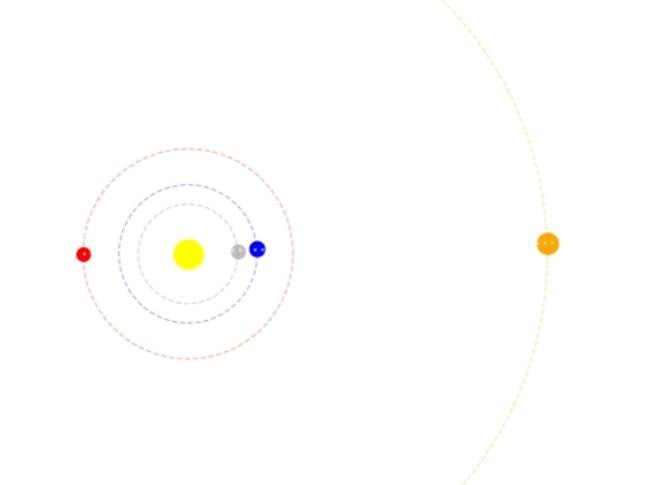
The following image shows Venus, Earth, and Jupiter in the sky of Mars. It was published on X, but some users claimed it was fake, saying that the three planets couldn’t be seen aligned because Mars’s orbit was in the middle of theirs.

So I created the following diagram to explain that it is absolutely possible to see them like this, after sunset, even if it’s not a frequent configuration. For the planets to be seen, Jupiter, Earth, and Venus must be illuminated by the Sun, so they must be on the other side of the Sun’s orbit, as in my drawing. (Note: the orbits are to scale; the planets and the Sun’s measurements are not!)
However, I cannot guarantee that the photo isn’t fake!
Why are clouds white?
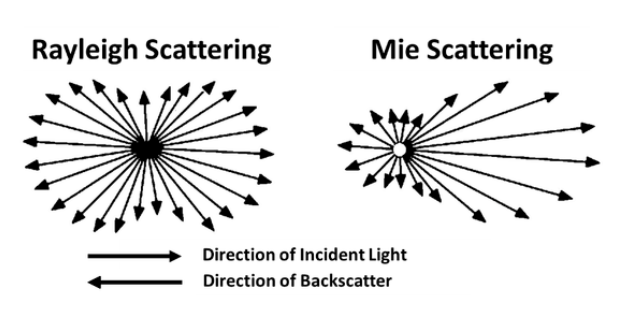
We need to examine a type of scattering that involves photons of solar radiation when they interact with the molecules that make up the tiny droplets (or water droplets) forming clouds or fog. Unlike Rayleigh scattering (which involves nitrogen and oxygen molecules in the air, see my post The Rayleigh scattering and the blue sky, whose sizes are smaller than the wavelength of the incoming radiation), in this case the droplets are of the same order of magnitude as the radiation wavelength (or slightly larger). This phenomenon is called Mie scattering, named after the German physicist Gustav Adolf Fedor Wilhelm Ludwig Mie (1869–1957), who provided a rigorous mathematical demonstration of it.
Because these microdroplets are ‘large’, they scatter nearly all wavelengths with approximately the same intensity, so the light appears white (or whitish). There is no wavelength-selection effect as in the case of the blue sky.
Another characteristic is that the scattering does not occur uniformly in all directions but mainly forward (in the same direction as the incoming light), creating strong glare, while a smaller fraction is scattered backward. See Figure 2.
Figure 1 – White clouds !

Figure 2 – Rayleigh scattering and Mie scattering
This explains why clouds tend to be white and why, when you shine car headlights into fog, a blinding glow is produced (due mainly to the backscattered component), see Figure 3. It also explains why truck drivers -whose driving position is at least a couple of meters higher than the level of their headlights (rather than about half a meter or less, as in cars)- experience this backscattering effect to a lesser extent and therefore can actually see the road in fog better than a car driver. See Figure 4 (clearly rather banal examples, only ‘evocative’ to suggest points of view).
This is also the reason why fog lights are always mounted very low, both on cars and on commercial vehicles: to maximize the angle relative to the backscattered glare produced by Mie scattering.
Figure 3 – Blinding glow while driving a car in the fog
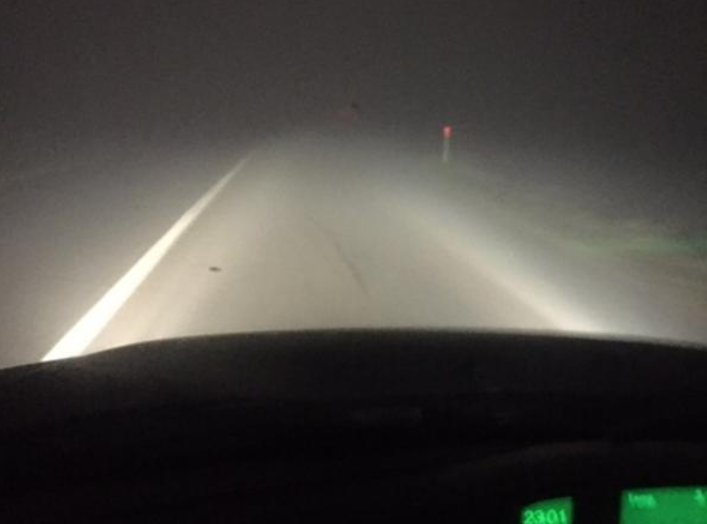
Figure 4 – Driving a truck at night

Technically,
Mie theory provides an exact solution to Maxwell’s equations for the interaction of a plane electromagnetic wave with a homogeneous sphere of dielectric material. It has no limits beyond the size of the interacting material (as in the case of Rayleigh scattering).
In Mie theory, the total extinction of light (absorption + scattering) is defined by the coefficient Qₑₓₜ.
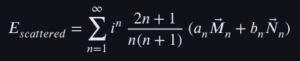
Mathematically, the diffuse electric field is expressed as an infinite series of coefficients (called aₙ and bₙ), which represent the contributions of the electric and magnetic multipoles:
where Mₙ and Nₙ are spherical vector wave functions. The larger the particle (i.e. the fog), the more terms in the series are needed to calculate the correct scattering.
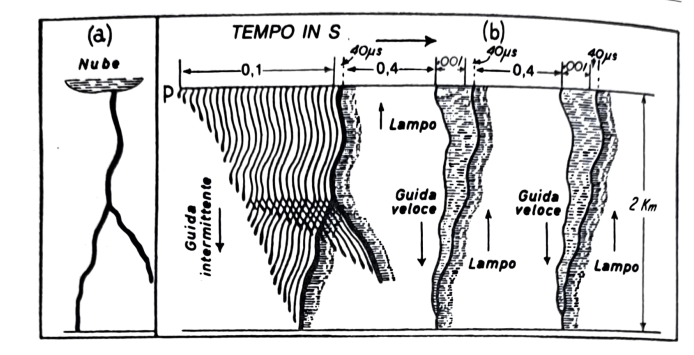
An interesting explanation is given in Ottavio Vittori’s excellent book L’atmosfera del pianeta Terra (Zanichelli, 1992), from which the introductory chapter on this powerful electrical phenomenon is attached with the best intentions.
It’s written in italian.
 Vittori 1992_L’atmosfera del pianeta Terra
Why is the night sky dark?
If universe were infinite, eternal, and static, as Giordano Bruno (1548-1600) claimed, as did cosmology until the early 20th century, adding that it is also populated by stars in a homogeneous manner, the night sky should be bright and not dark. This contradiction was already noted by Johannes Kepler (1571-1630) in 1610 in Dissertatio cum Nuncio Sidereo.
However, the principle was clearly formulated in 1826 by Einrich Wilhelm Olbers (1758-1840), who mathematically demonstrated (see below, optional reasoning which can be skipped) why the night sky should shine according to the cosmology of the time, highlighting a paradox with respect to observation.
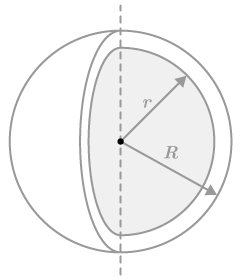
Imagining the universe as consisting of spherical shells concentric with respect to our point of observation (see Figure 1), the intensity of radiation received (flux f ) from a source ( L ) at a distance ( r ) is inversely proportional to the square of the distance:
[1] f = L / 4 π r²
The number of sources contained in the shell is proportional to the volume, which increases with the square of the distance (by infinitesimal increments
dr = R – r with reference to Figure 1):
[2] dn ∝ dV ≈ 4 π r² dr
Therefore, the effects of [1] and [2] compensate each other and each shell contributes with the same intensity, regardless of distance.
The infinitesimal intensity ( dI ) coming from the infinitesimal shell, multiplying [1] and [2], is:
[3] dI = f dn = n L dr
Integrating [3] gives the total intensity:
[4] I =∫₀ᴿ n L dr = n L R
Therefore, for R → ∞, the intensity [4] should become infinite. So something is wrong with the reasoning (hence the paradox).
Figure 1 – sketch of a spherical shell
The observation of the dark night sky is explained in modern terms (based on cosmological standard model) because the universe has existed for a finite time (Big Bang hypothesis) and is expanding (interpretation of the redshift of radiation from remote sources).
In the first case, it is considered that the light from remote sources, which has a finite speed, simply has not reached us yet.
In the second case, redshift, or the shift of light towards longer wavelengths (for example, in the infrared band, beyond the range visible to the eye), prevents the observation of remote sources.
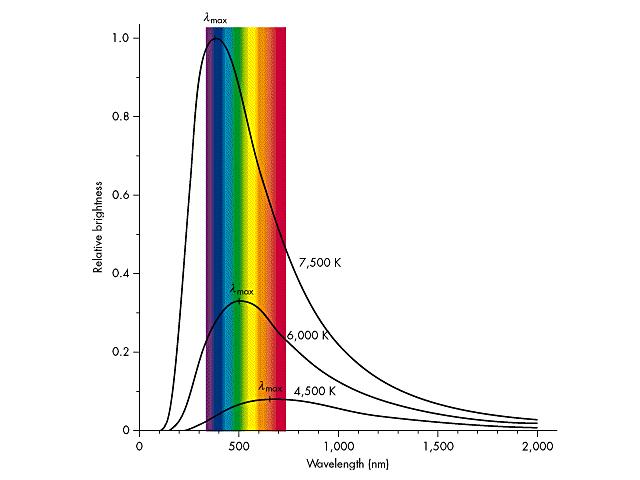
It should also be remembered that the distribution of the intensity of radiation from stellar sources follows a Planckian curve (see Figure 3), which has its maximum in the visible light band. In other words, there are no significant intensities of radiation in a typical stellar source that, moving due to the effect of redshift, could affect this visible band.
In fact, we emphasize that the range of radiation visible to our eyes is very small compared to the entire spectrum of radiation, as shown in Figure 2.
In reality, redshift alone would explain the dark night sky, even if the universe were infinite and without assuming a Big Bang. And even without expansion, if the observed redshift had a different cause.
Figure 2 – full spectrum of radiation with visible band
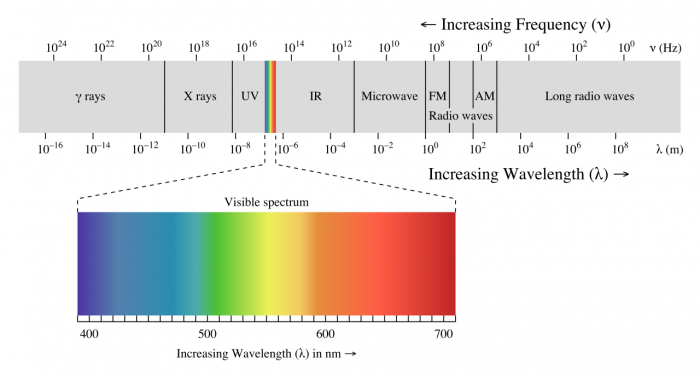
Figure 3 – A sketch of a Planckian functions of brightness (intensity of radiation emitted per unit solid angle) for stellar sources with different surface temperatures. That of the Sun is approximately 5700 K.
Why is the daytime sky blue?
We need to examine a type of scattering that affects photons from solar radiation when they interact with the molecules that make up the atmosphere, namely nitrogen and oxygen (99% of the components).
This is Rayleigh scattering (named after Nobel Prize winner John William Strutt Rayleigh, 1842-1919), which affects particles smaller than the wavelength of the incident radiation. It is an elastic scattering, so the wavelength of the same radiation is not changed.
We are dealing with photons, but the formula was developed on the basis of classical electromagnetic theory, not quantum theory (which was created after Rayleigh’s death).
Figure 1 – Angular dependence of Rayleigh Scattering
(copyright MLisandra, CC BY-SA 4.0, via Wikimedia Commons, here without the formula inscription)
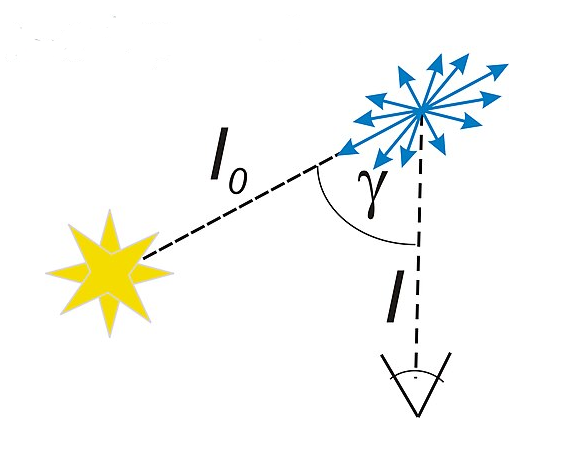
For the explanation we are looking for, the Rayleigh scattering formula can be simplified as follows (see also Figure 1):
[1] I ~ I₀ (1+cos²γ) / λ⁴
where I is the intensity of the scattered radiation, I₀ is the intensity of the incident radiation with wavelength λ , γ is the scattering angle of the incident radiation.
We can immediately see that the angle where the intensity [1] is lowest is the right angle ( π/2 ), where the cosine is zero (see Figure 2), meaning that the sky is darkest (the blue is most intense) at an angle of 90° to the direction of the Sun.
Furthermore, the dependence on the inverse of the fourth power of λ suggests that the effects for different wavelengths are significantly different. In fact, blue light is scattered much more than red light, which has a longer wavelength (see Figure 3), making the sky blue. Even shorter wavelengths, such as those of violet, are less intense at source and do not contribute significantly.
At dawn and dusk, blue light is highly scattered by the greater layer of atmosphere it passes through, together with yellow and green light, so red/orange light dominates.
In the case of smaller particles, the cross section and refractive index of the particle are considered, but even if atmospheric gas molecules are treated as point sources, in this case the effects depend on their polarizability due to incident radiation. Those who take photographs using a polarizing filter are familiar with this phenomenon: in fact, by adjusting the filter effect and therefore the polarization, the sky can even become completely black at 90° to the Sun, which can be creative but not very realistic!
Figure 2 – cosine function behaviour
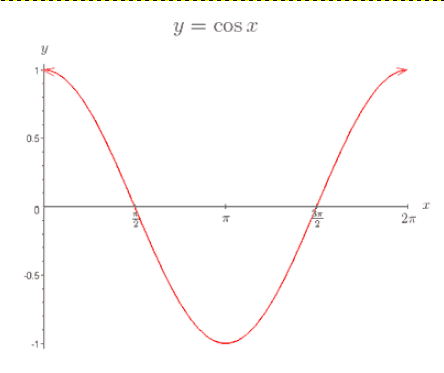
Figure 3 – visible band of radiation

See also Mie scattering and white clouds.
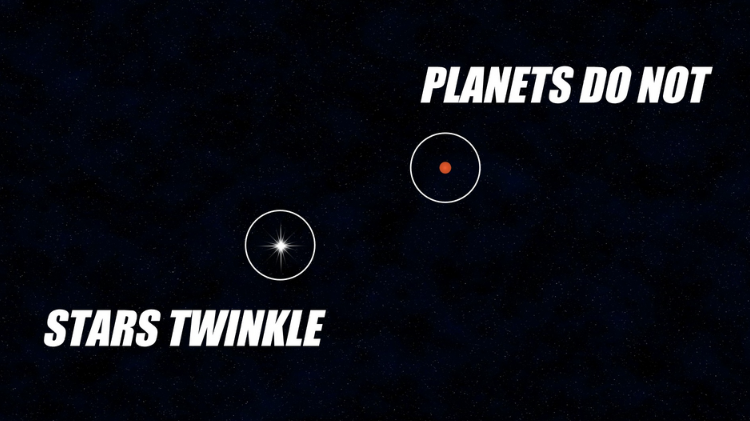
This fact, known for millennia, allows even the layman to immediately distinguish in the night sky one of the planets of the Solar System (Venus, Mars, Jupiter, Saturn) from the stars with the naked eye.
These light sources, observed from the Earth’s surface, exhibit two main characteristic behaviors due to the same cause, atmospheric turbulence:
– slight oscillations in position (appreciable with good binoculars or a small telescope)
– intensity twinkling (typically only stars).
Other effects, especially when the source is close to the horizon, are: chromatic twinkling (color changes), atmospheric extinction (decrease in brightness), reddening, and twinkling of the planets.
Atmospheric turbulence at low altitudes (the first tens or hundreds of meters) is responsible for positional oscillations, together with turbulence at medium altitudes (6-8 km) where air cells of different temperatures and densities mix, while turbulence near the tropopause (8-12 km) associated with jet streams is responsible for scintillation.
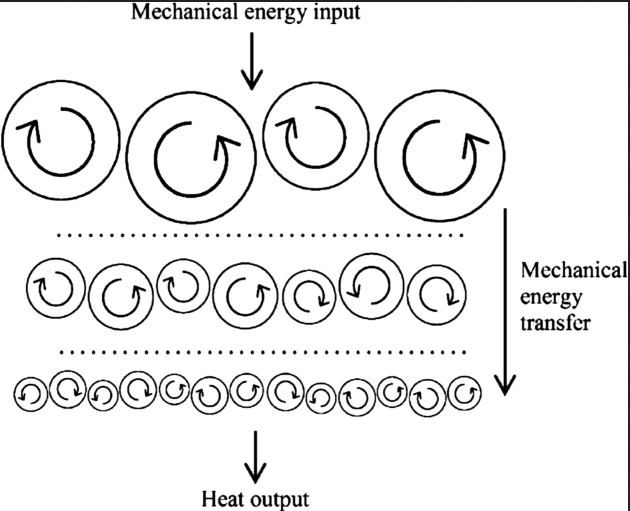
It is the optical dimensions of the sources that make the difference in the scintillation, based on their interaction with turbulence cells, which also vary in size. Jet streams determine large cells, ranging from tens to hundreds of meters, but turbulence follows Kolmogorov’s cascade model (see Figure 1), dissipating the initial kinetic energy into increasingly smaller vortices, down to the order of centimeters or millimeters, eventually dissipating into heat. It is precisely these microcells that deflect the point-like light from stellar sources, but they have a mediated effect in the case of optically larger sources such as planets, which involve multiple cells. The final effect is the stabilization of the source’s light, which therefore appears non-twinkling.
Figure 1 – An illustrative sketch of turbulence transformation according to Kolmogorov’s cascade model
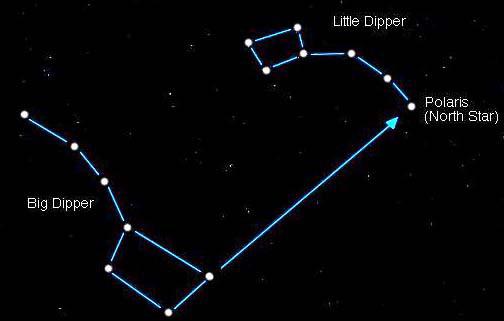
At night, everyone knows that North is roughly indicated by the North Star, which is easy to locate using the well-known asterism of the Big Dipper (and/or the slightly less prominent Little Dipper), see Figure 1.
Figure 1
During the day, however, the easiest direction to identify is South, which is accurately indicated by the Sun at its culminate point at noon every day of the year. Without having to wait for the culmination, knowing the time, you can estimate the direction of South by adding to the direction of the Sun at that moment (in the northern hemisphere, to the right in the morning and to the left in the afternoon) the angle missing to reach noon, considering 15° for each hour to midday (a full rotation of the Earth of 360° divided by 24 hours = 15°).
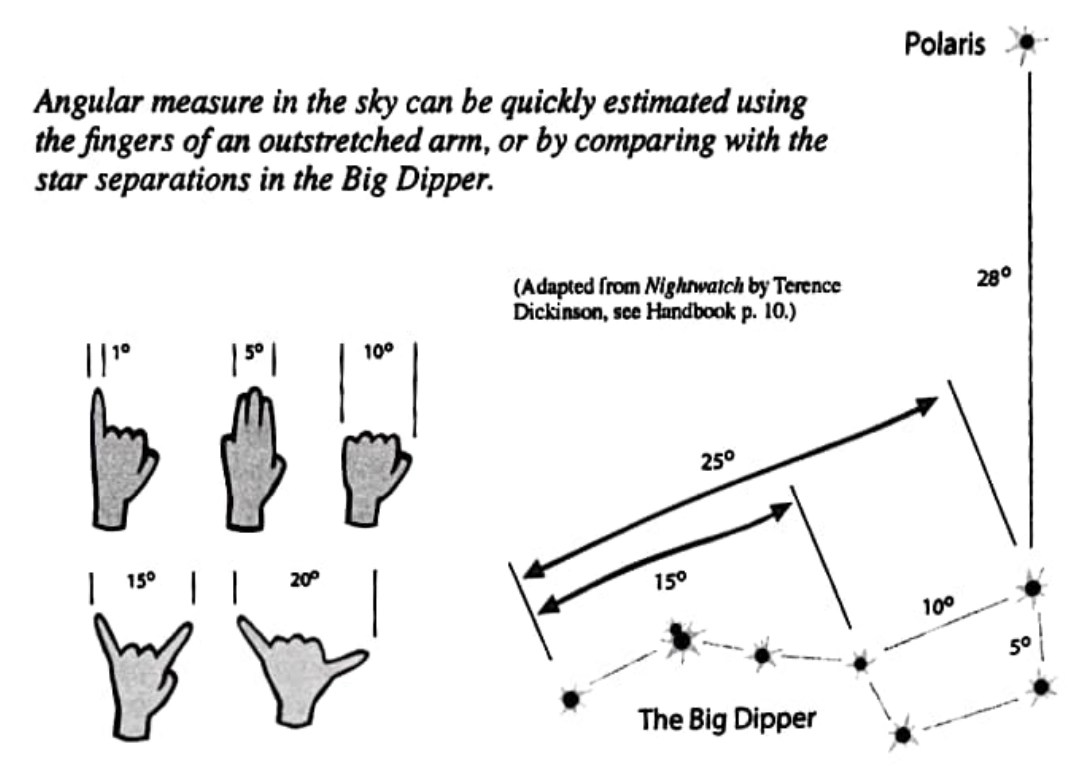
See Figure 2 for some practical references for estimating angles in the sky.
The height in degrees of the Sun above the horizon at its culmination point has been used for thousands of years to determine the observer’s latitude. Eratosthenes of Cyrene (276-194) used it to calculate the circumference of the Earth in a way that was effective for the knowledge of the time.
And again, thanks to knowing the exact ‘universal’ time, you can determine the longitude by converting the hours/minutes difference between the local culmination time of the Sun and the culmination time at longitude zero, taken as a reference, at the Greenwich meridian, into degrees. Obviously, east of this meridian, the culmination will be earlier, while west of it, it will be later.
This principle has also been known for centuries. However, it was possible to exploit it only when clocks of sufficient precision and reliability were built (at the beginning of the 18th century, mainly thanks to John Harrison, see for example Longitude, Dava Sobel, Walker Publishing Company, 1995).
To obtain accurate measurements, precision instruments (like a sextant) are obviously required (apart from the GPS available in every cell phone today!), but for a rough estimate, the above is sufficient.
Figure 2 – Easy reference for measuring angles in the sky (image credit: Nightwatch, Terence Dickinson)
The positions and the sizes of cosmological objects observed as projected onto a background sphere are measured in degrees, starting from reference orientations. This brief note aims to highlight the observational ‘measurements’ of certain cosmological objects, measurements that are rarely taken into consideration.
We imagine a simple observation of the night sky with the naked eye…
An approximate idea of the measurements in degrees can be obtained from Figure 1. Other references are the measurements of the Sun and Moon, both approximately 0.5° (which is why we have total solar eclipses).
Since they cannot be seen ‘at a glance’ because they are not very bright, we do not realize that some cosmological objects are actually ‘large’ in the sky.
Figure 1 – Easy reference for measuring angles in the sky (image credit: Nightwatch, Terence Dickinson)
For example:
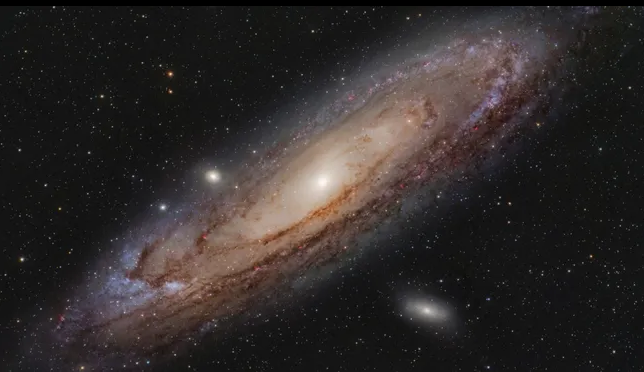
– the Andromeda galaxy (Figure 2) measures about 3° x 1° (so it is 6 times the size of the Moon)
Figure 2 – Andromeda galaxy (image credit: Westend61 via Getty Images)
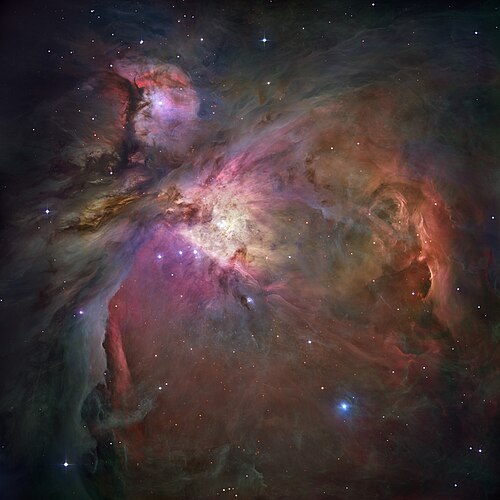
– the Orion Nebula (Figure 3, the star-forming region closest to us in our galaxy, about 1350 light-years away) measures about 1° x 1° (i.e., twice the size of the Moon)
Figure 3 – Orion Nebula (image credit: NASA/ESA’s Hubble Space Telescope)
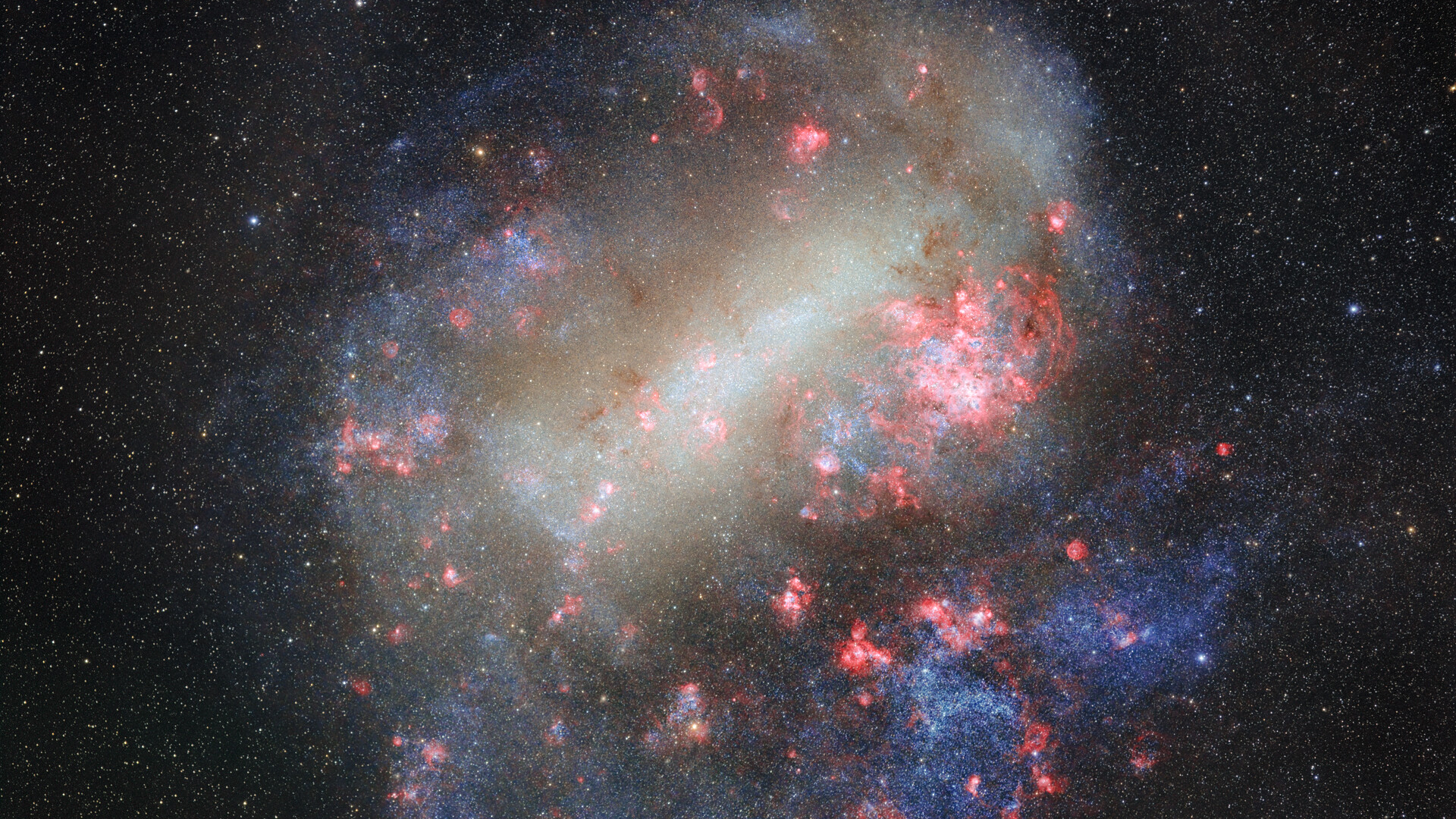
– The Large Magellanic Cloud (Figure 4, visible in the southern hemisphere) measures approximately 11° x 9° (i.e., it is 22 times wider than the Moon).
Figure 4 – Large Magellanic Cloud (image credit: Spitzer Space Telescope by NASA)
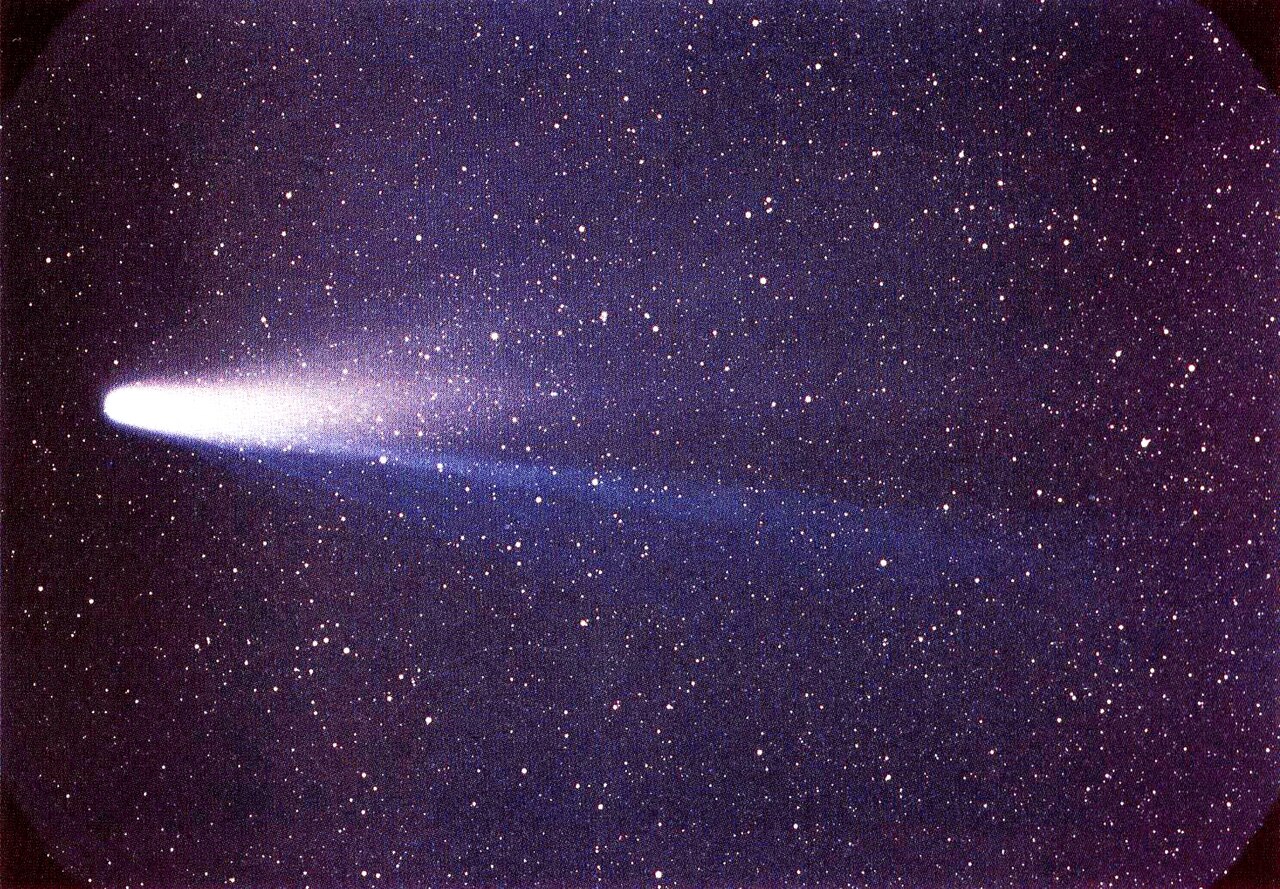
– Halley’s Comet (Figure 5), which passed by in 1986 (and will pass by again in 2061), measured a maximum of 15° (i.e., 30 times the width of the Moon).
Figure 5 – Halley’s Comet (image credit: W. Liller, Easter Island, part of the International Halley Watch IHW)
For comparison with the nearby planets in our solar system:
– Jupiter (whose diameter is about 11 times that of Earth) can reach a maximum of 50″ (or only 1/36 of the width of the Moon)
– Saturn (whose diameter is about 9.5 times that of Earth) can reach a maximum of 20″.
Credits: Teaching material for Spherical and Practical Astronomy course, Prof. Enrico Maria Corsini (University of Padua, Italy)