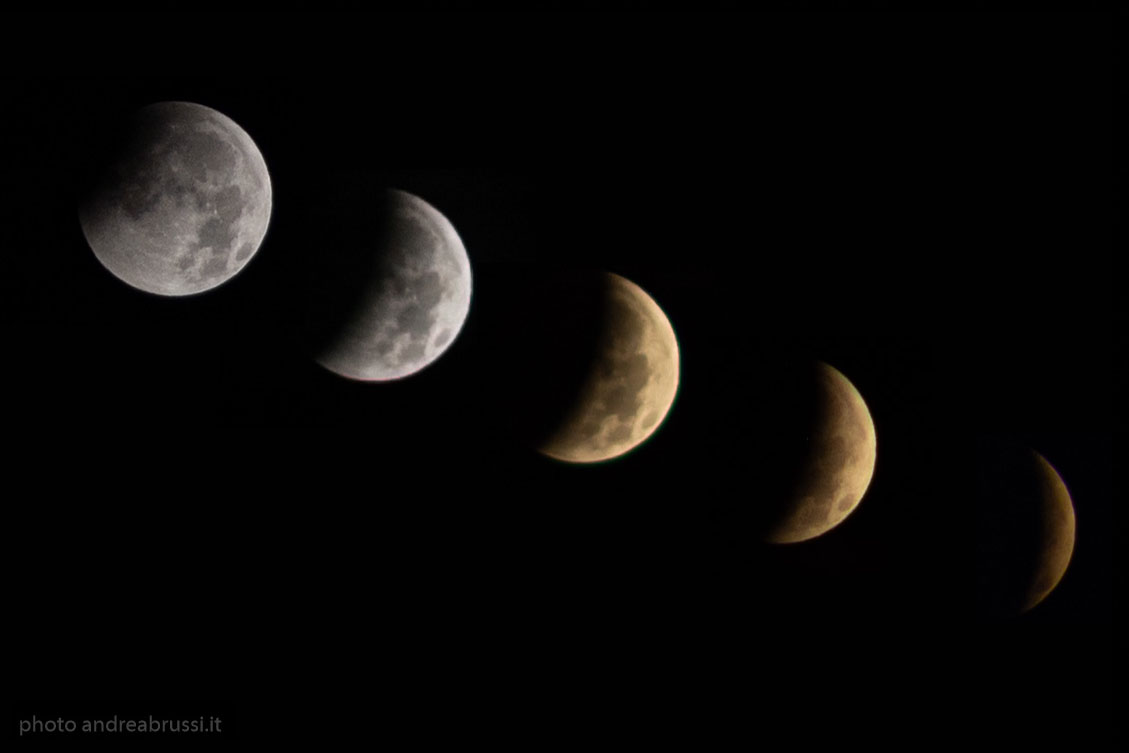
A very modest contribution to the last lunar eclipse taken with a normal reflex lens – Nikon D7200, Nikkor 85 mm f 1.8, in the province of Treviso (Italy). Unfortunately, the sky was slightly cloudy.
please, rate this post
My Science & Epistemology Researches
Posts with photographic content.
A very modest contribution to the last lunar eclipse taken with a normal reflex lens – Nikon D7200, Nikkor 85 mm f 1.8, in the province of Treviso (Italy). Unfortunately, the sky was slightly cloudy.
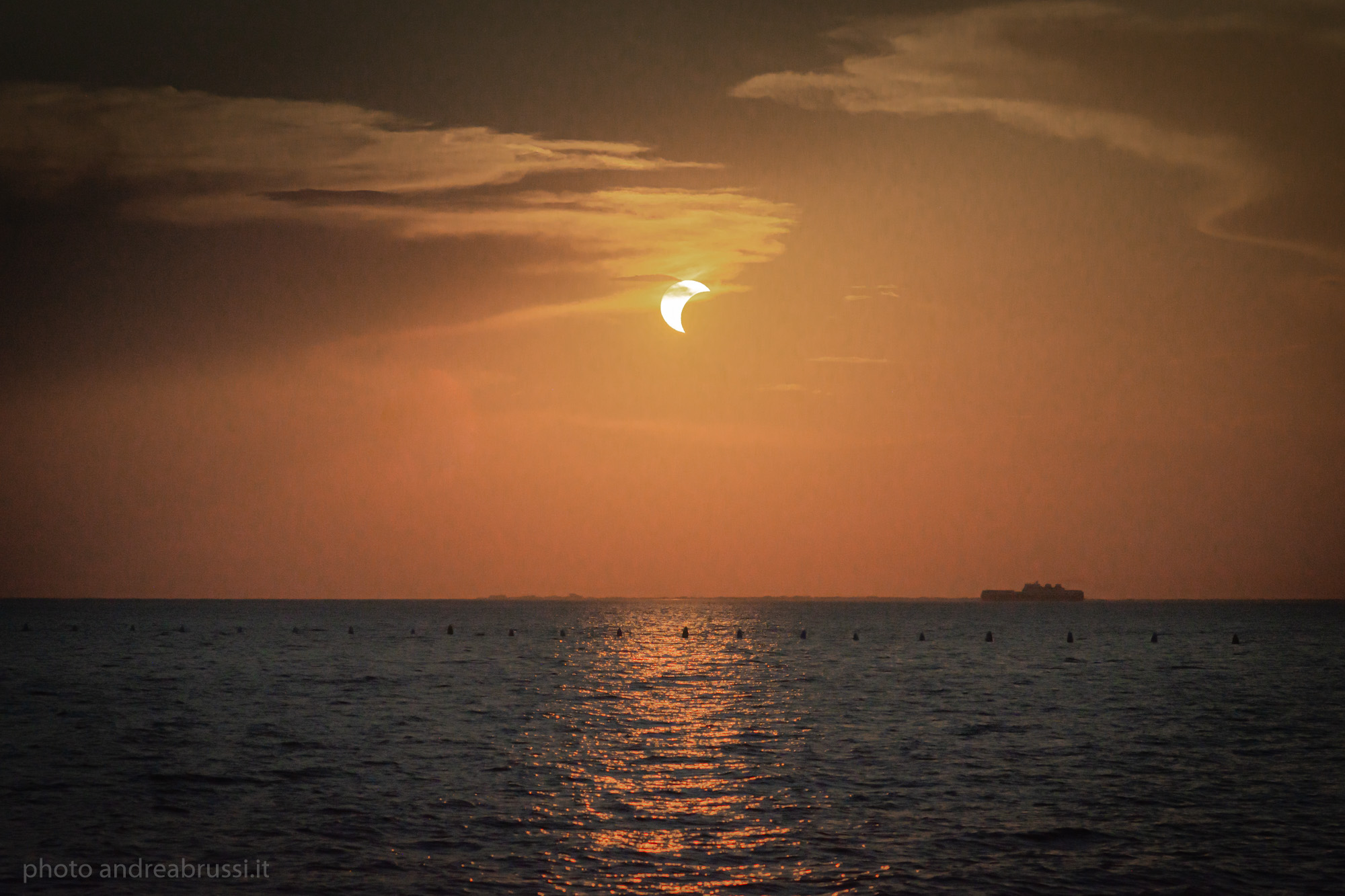
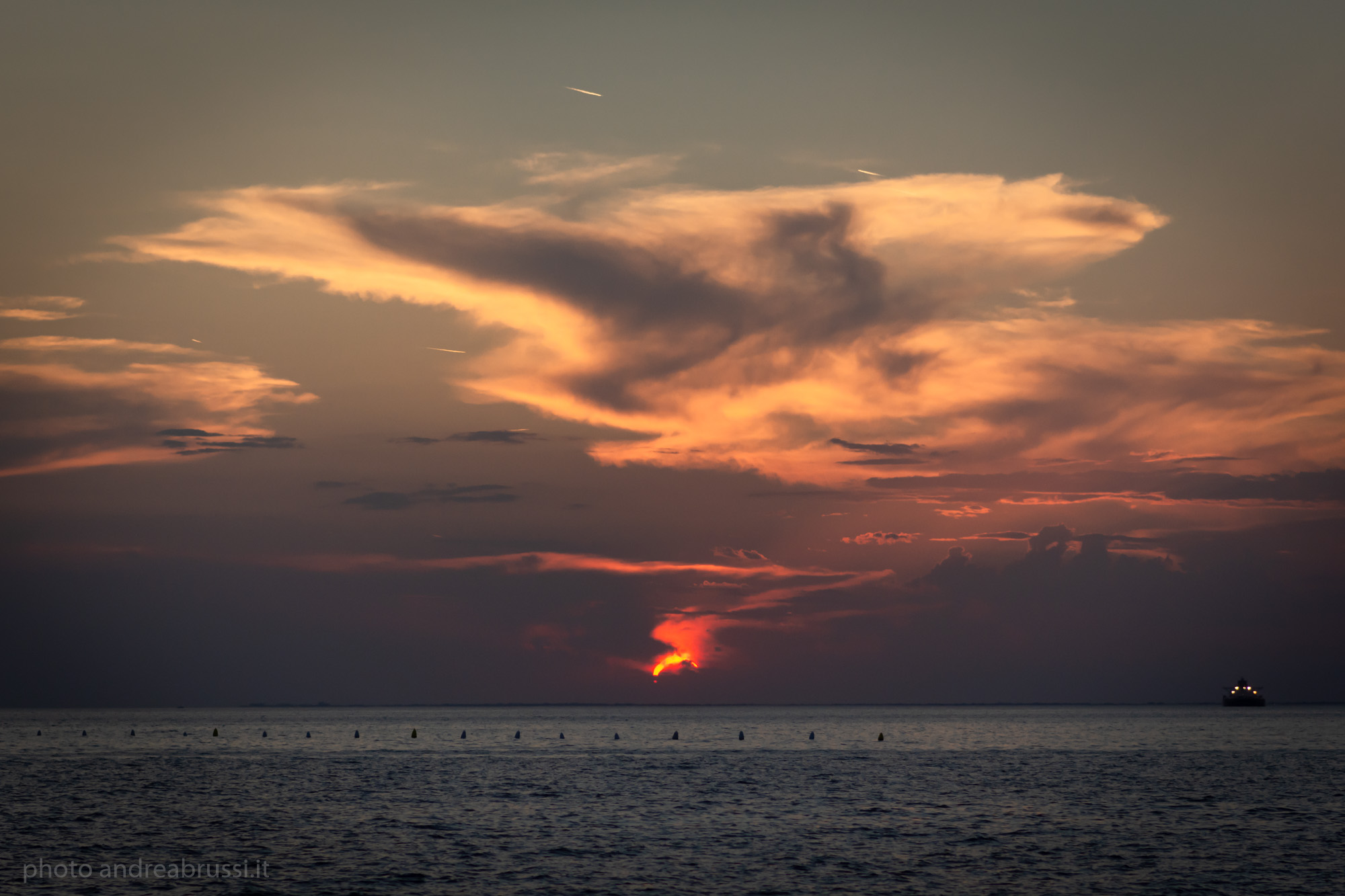
The clouds then prevented us from enjoying the sunset over the sea to the fullest (about 90%), but it was still exciting.
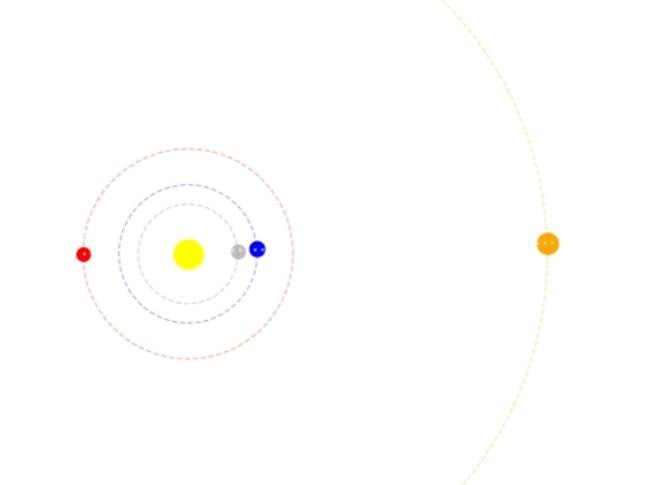
The following image shows Venus, Earth, and Jupiter in the sky of Mars. It was published on X, but some users claimed it was fake, saying that the three planets couldn’t be seen aligned because Mars’s orbit was in the middle of theirs.

So I created the following diagram to explain that it is absolutely possible to see them like this, after sunset, even if it’s not a frequent configuration. For the planets to be seen, Jupiter, Earth, and Venus must be illuminated by the Sun, so they must be on the other side of the Sun’s orbit, as in my drawing. (Note: the orbits are to scale; the planets and the Sun’s measurements are not!)
However, I cannot guarantee that the photo isn’t fake!
The positions and the sizes of cosmological objects observed as projected onto a background sphere are measured in degrees, starting from reference orientations. This brief note aims to highlight the observational ‘measurements’ of certain cosmological objects, measurements that are rarely taken into consideration.
We imagine a simple observation of the night sky with the naked eye…
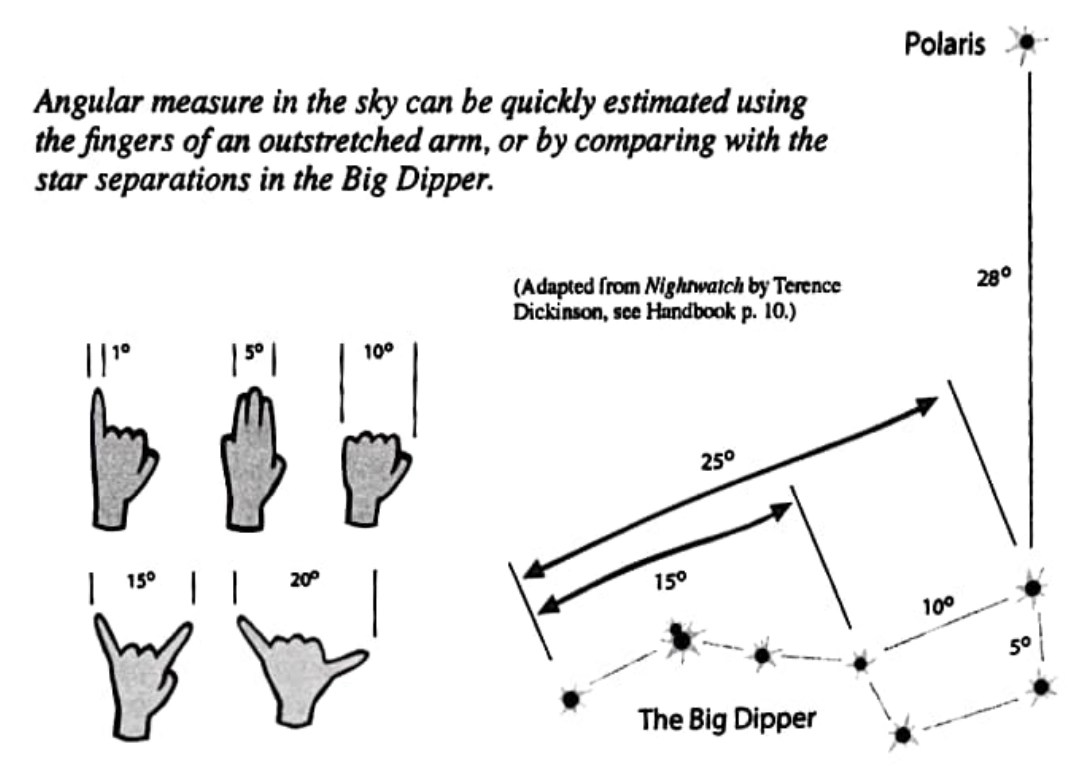
An approximate idea of the measurements in degrees can be obtained from Figure 1. Other references are the measurements of the Sun and Moon, both approximately 0.5° (which is why we have total solar eclipses).
Since they cannot be seen ‘at a glance’ because they are not very bright, we do not realize that some cosmological objects are actually ‘large’ in the sky.
Figure 1 – Easy reference for measuring angles in the sky (image credit: Nightwatch, Terence Dickinson)
For example:
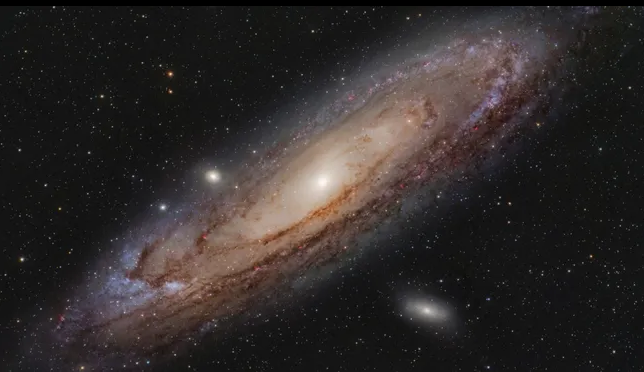
– the Andromeda galaxy (Figure 2) measures about 3° x 1° (so it is 6 times the size of the Moon)
Figure 2 – Andromeda galaxy (image credit: Westend61 via Getty Images)
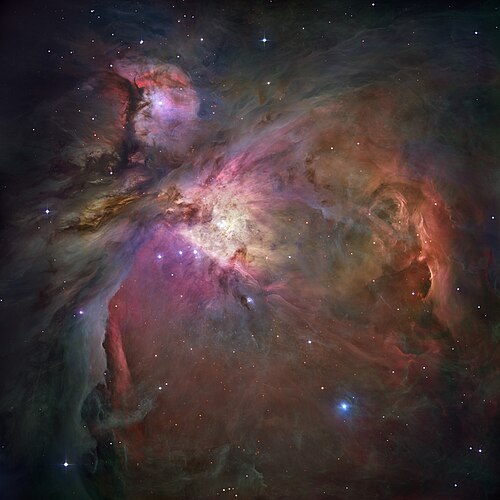
– the Orion Nebula (Figure 3, the star-forming region closest to us in our galaxy, about 1350 light-years away) measures about 1° x 1° (i.e., twice the size of the Moon)
Figure 3 – Orion Nebula (image credit: NASA/ESA’s Hubble Space Telescope)
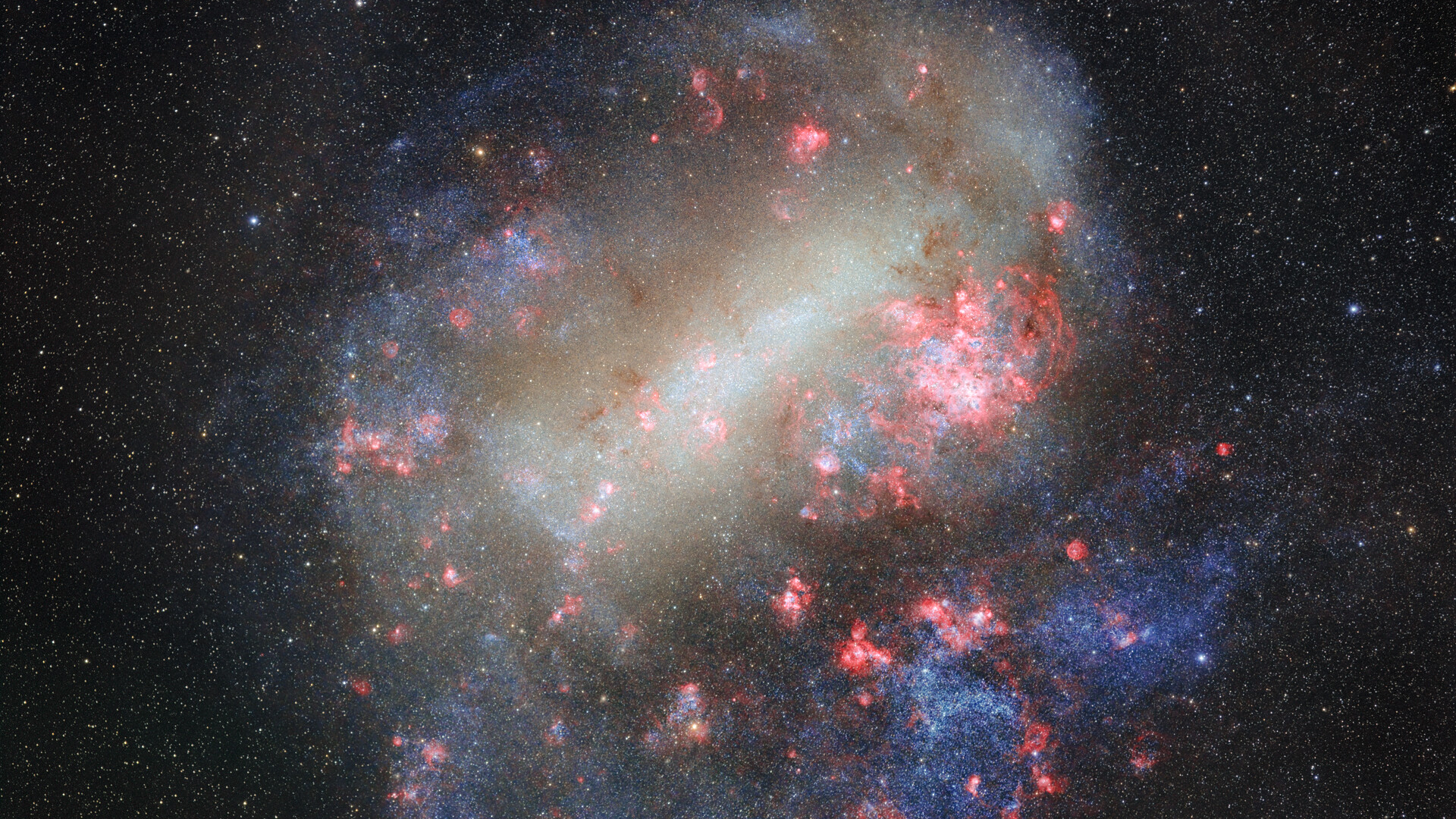
– The Large Magellanic Cloud (Figure 4, visible in the southern hemisphere) measures approximately 11° x 9° (i.e., it is 22 times wider than the Moon).
Figure 4 – Large Magellanic Cloud (image credit: Spitzer Space Telescope by NASA)
– Halley’s Comet (Figure 5), which passed by in 1986 (and will pass by again in 2061), measured a maximum of 15° (i.e., 30 times the width of the Moon).
Figure 5 – Halley’s Comet (image credit: W. Liller, Easter Island, part of the International Halley Watch IHW)
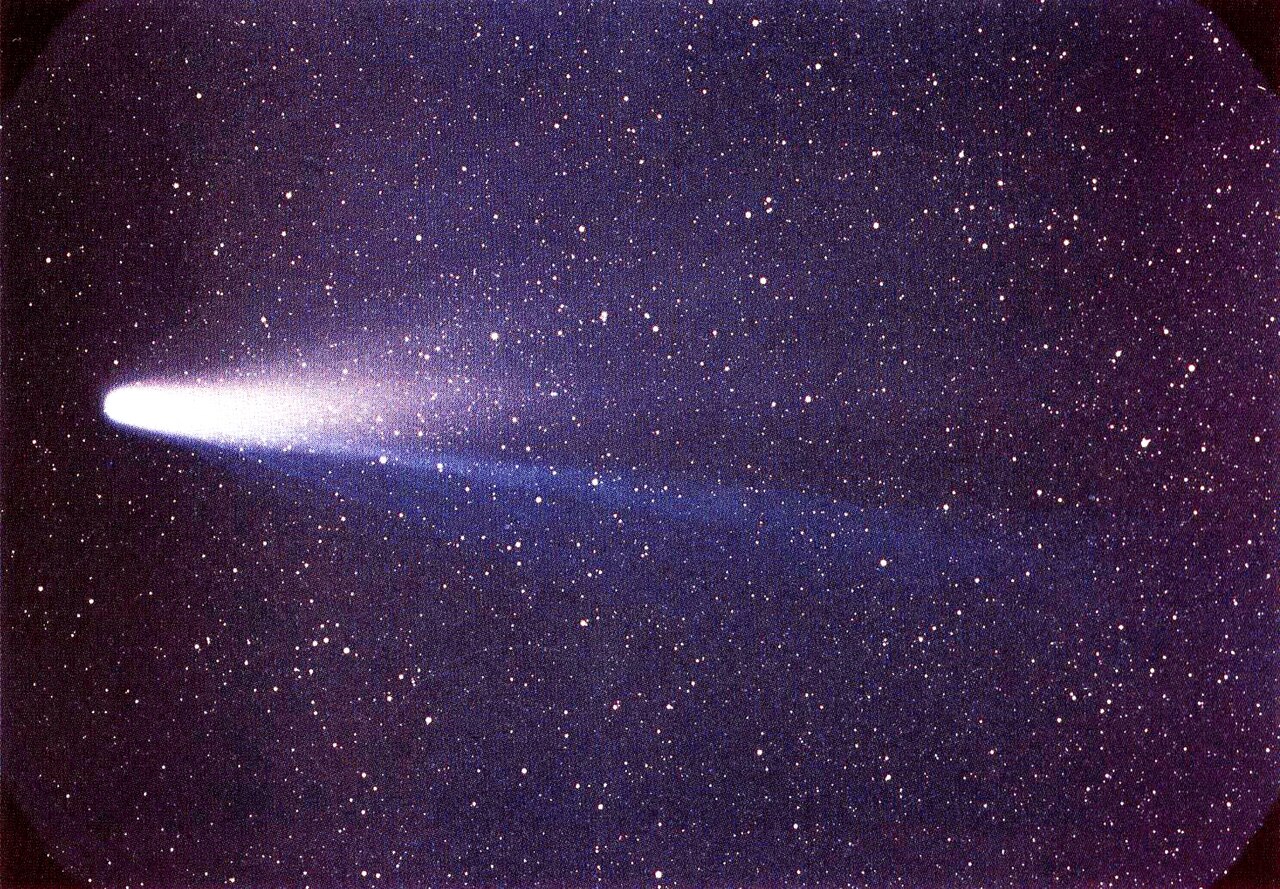
For comparison with the nearby planets in our solar system:
– Jupiter (whose diameter is about 11 times that of Earth) can reach a maximum of 50″ (or only 1/36 of the width of the Moon)
– Saturn (whose diameter is about 9.5 times that of Earth) can reach a maximum of 20″.
Credits: Teaching material for Spherical and Practical Astronomy course, Prof. Enrico Maria Corsini (University of Padua, Italy)
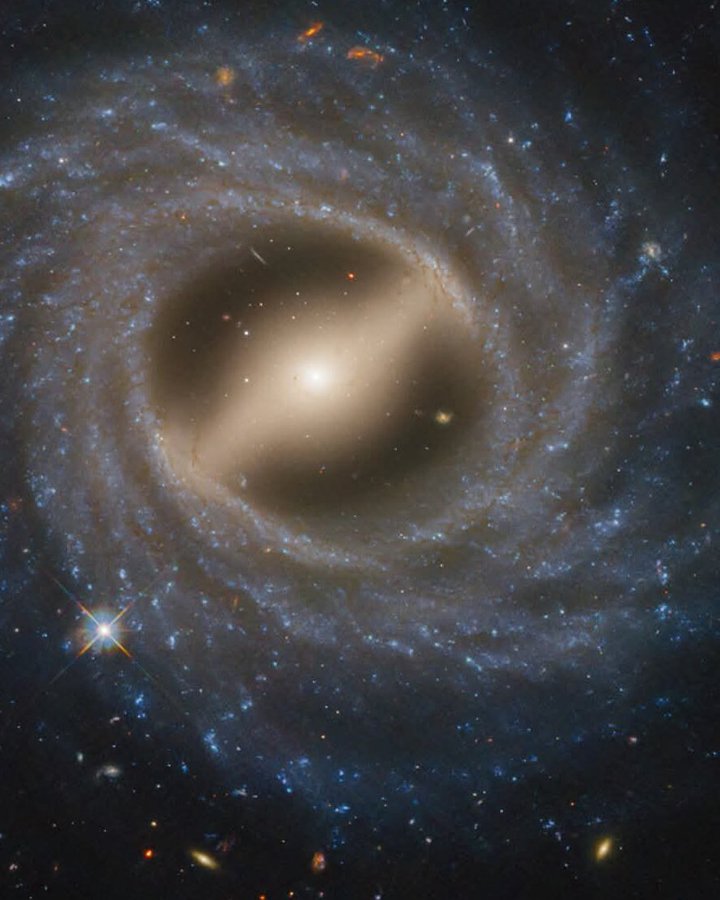
This image of NGC 5335 was captured by the Hubble Space Telescope in 2025 to celebrate its 35th anniversary.
 read more on Black Hole X Channel
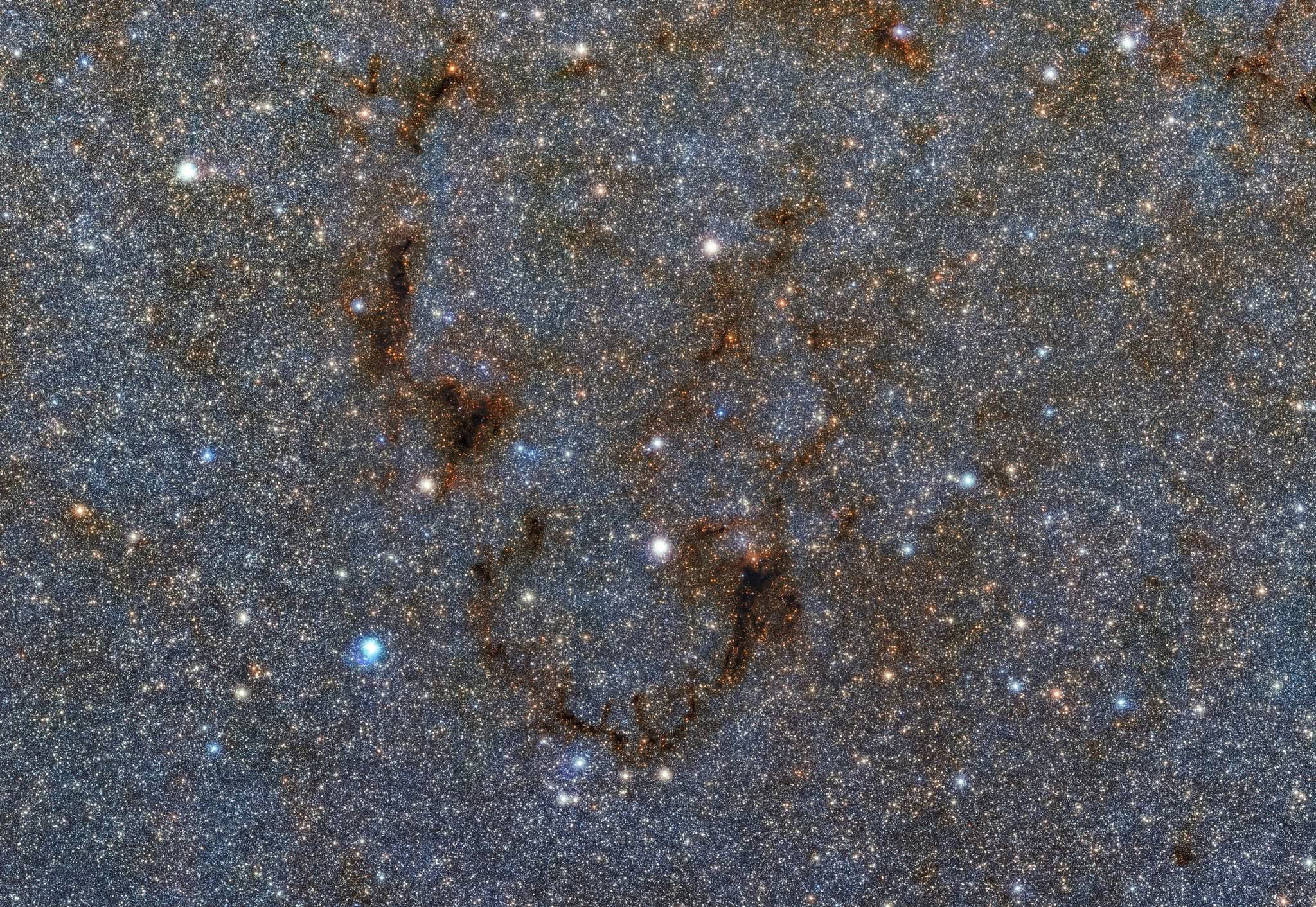
The galactic bulge is indeed an incredibly dense region. While the solar neighborhood has a stellar density of roughly about 1 star every 250 cubic light-years), the central bulge reaches densities of millions of stars per cubic light-year. In the densest parts, stars can be separated by only a few light-days or light-weeks, compared to the 4+ light-years between us and Proxima Centauri.
read more on Black Hole X Channel
Looking at photographs of galaxies, one gets the impression that they are gas clouds, as they were actually considered before the resolution of optical instruments allowed us to identify individual sources. As in these splendid images from HST (the Hubble Space Telescope) and VISTA (the Visible and Infrared Survey Telescope for Astronomy, part of ESO’s Paranal Observatory).
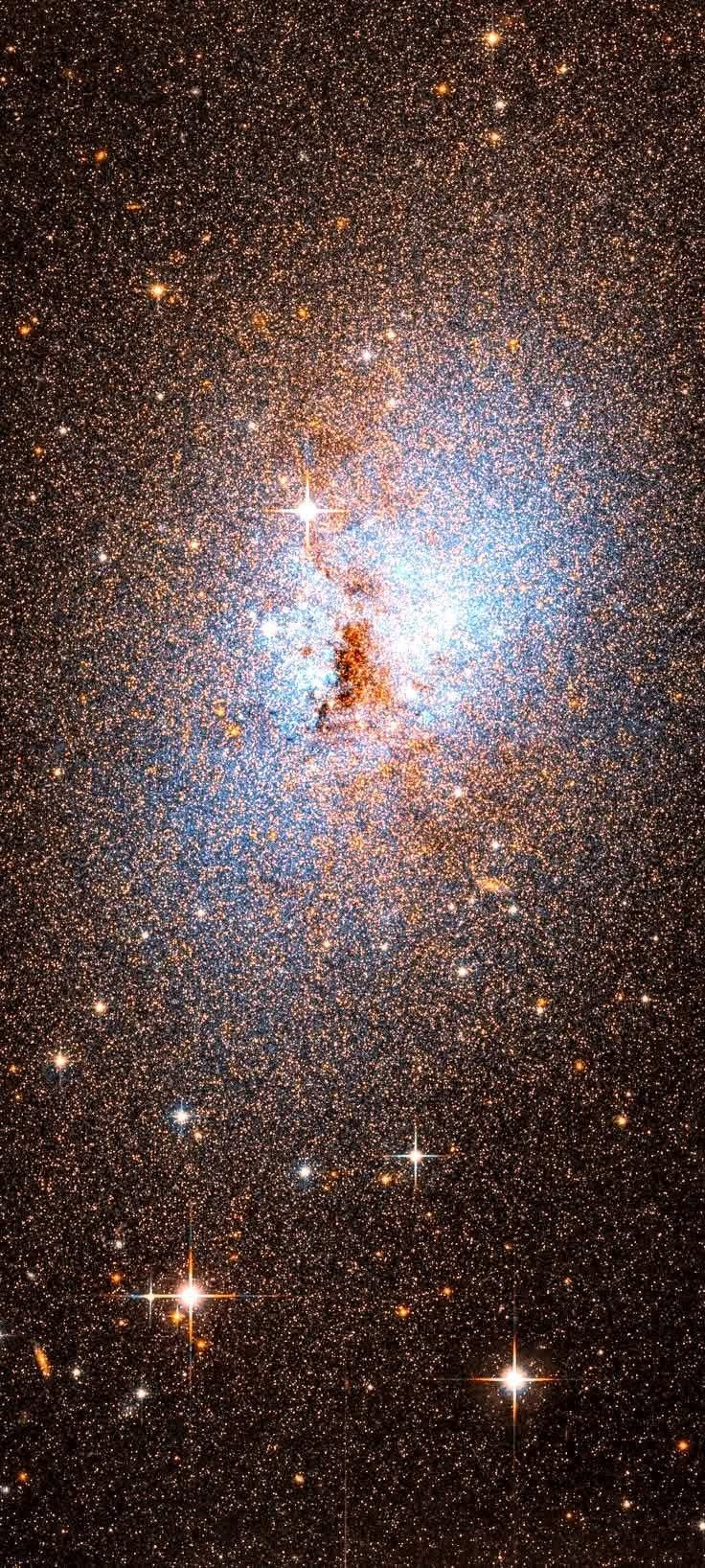
Young compact star cluster E269-58 by HST on X Black Hole channel
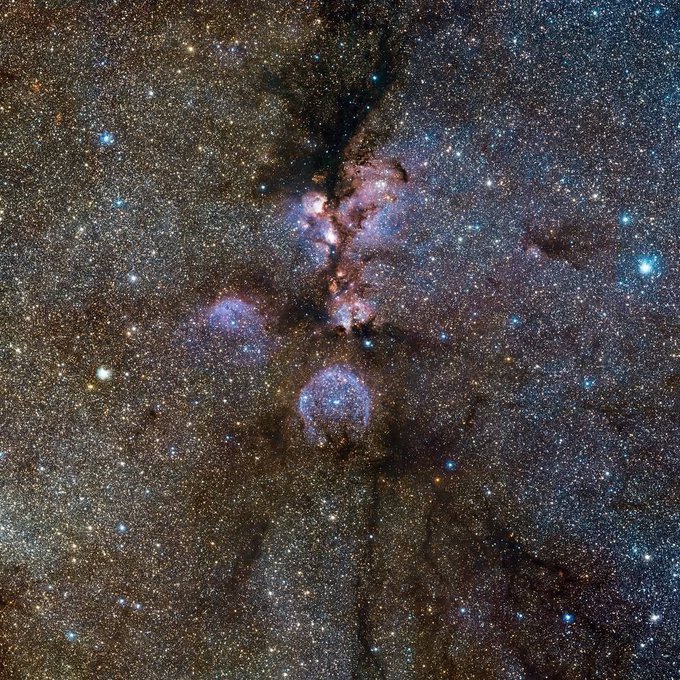
Cat’s Paw Nebula in Infrared on X Black Hole channel
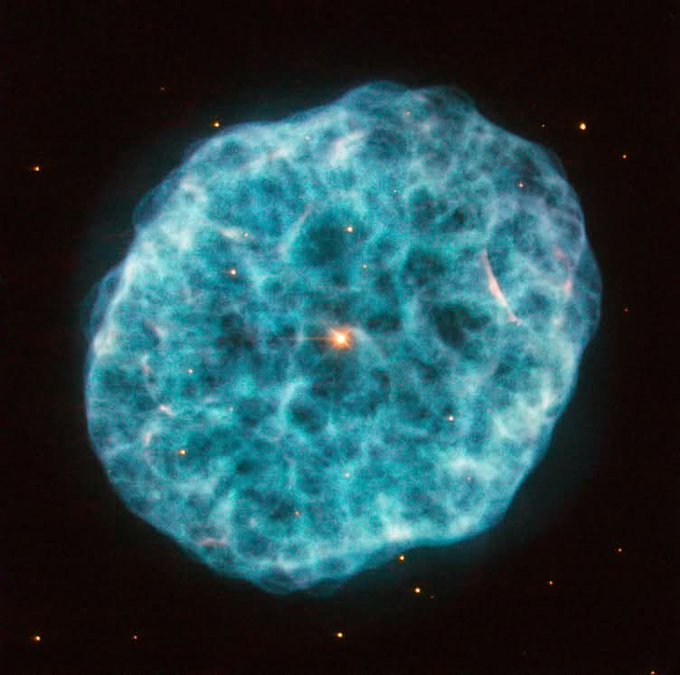
by HST on X Black Hole channel
NGC6537, the Red Spider Nebula, as seen by JWST
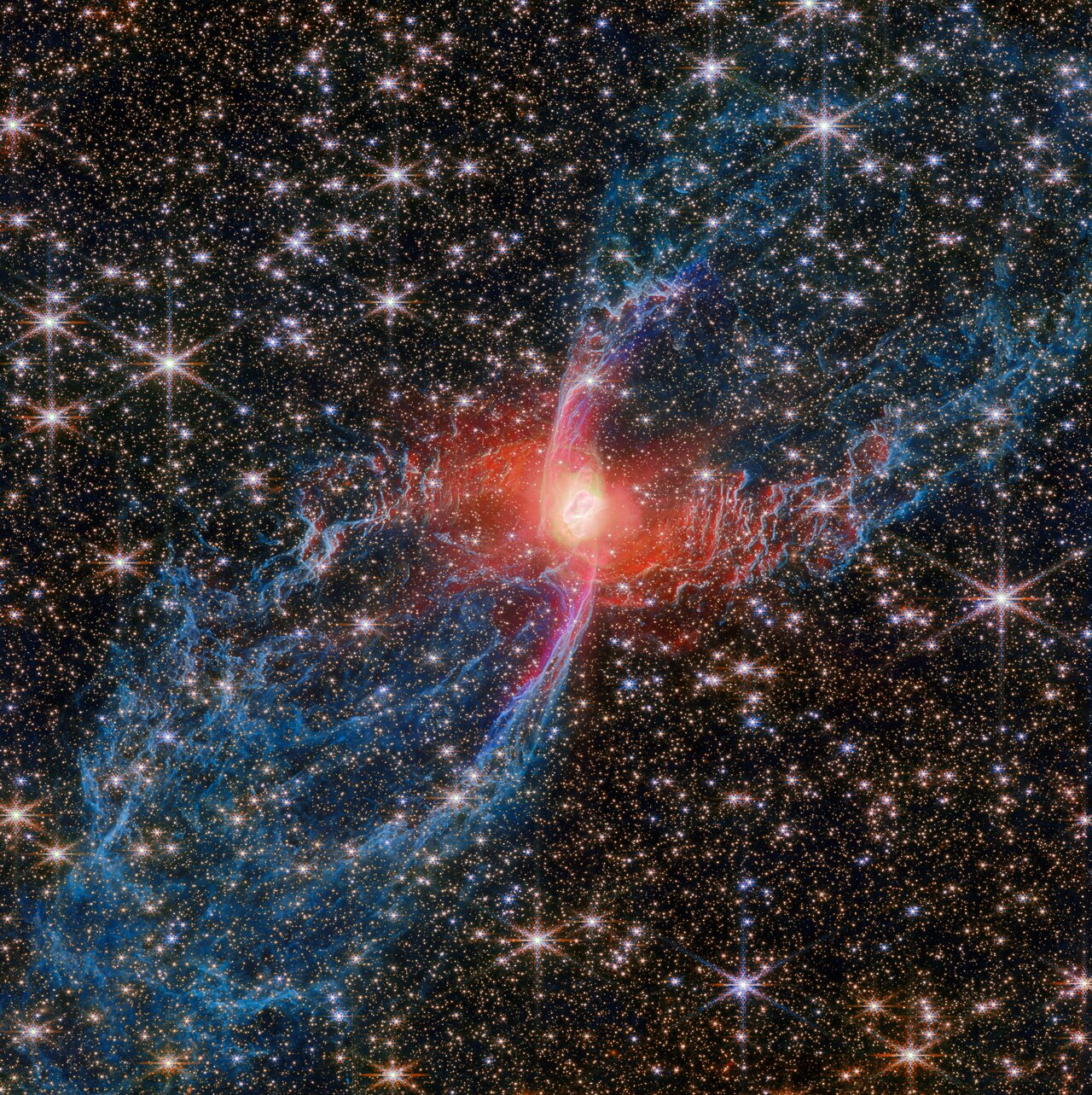
media.inaf.it “Nella tela del Ragno Rosso” (Ita)
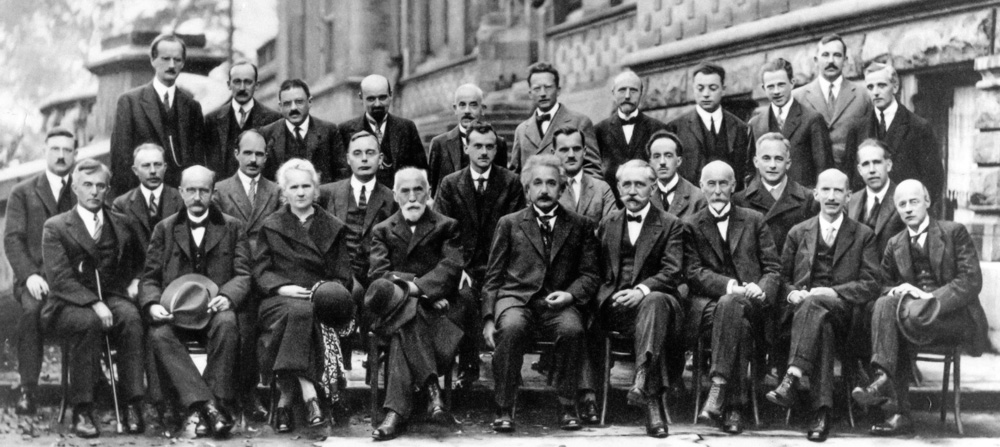
Solvay Conference on Quantum Mechanics, 1927 (photo by Benjamin Couprie, Institut International de Physique Solvay, Bruxelles, Belgium; I have slightly restored this photo, usually available in a lower detail level).
From behind, left to right: Auguste Piccard, Émile Henriot, Paul Ehrenfest, Édouard Herzen, Théophile de Donder, Erwin Schrödinger, Jules-Émile Verschaffelt, Wolfgang Pauli, Werner Heisenberg, Ralph Howard Fowler, Léon Brillouin, Peter Debye, Martin Knudsen, William Lawrence Bragg, Hendrik Anthony Kramers, Paul Dirac, Arthur Compton, Louis de Broglie, Max Born, Niels Bohr, Irving Langmuir, Max Planck, Marie Skłodowska Curie, Hendrik Lorentz, Albert Einstein, Paul Langevin, Charles-Eugène Guye, Charles Thomson Rees Wilson, Owen Willans Richardson

