AI as a Boltzmann brain: the illusion of knowledge cancelling the future

This reflection stems from a re-reading of my post on the Boltzmann Brain (see The Boltzmann Brain – an epistemological provocation). While the process today is evolving very rapidly, I believe it makes sense to analyze it from an evolutionary perspective.

The use of AI is certainly an effective support, but we must distinguish between contexts. Enhancing research within an environment of high-level expertise is one thing; using it to obtain basic answers by ‘the youth’ is quite another. The latter prevents the formation of a critical spirit and the necessary ‘fatigue of learning’. Without this granular foundation of skills, more complex elaborations become impossible.

Demographics are unforgiving. Soon, the figures trained on the fundamentals will disappear, replaced by those who never had to struggle to learn. Considering the ‘average’ person, it is easy to predict an immense cognitive impoverishment that will lead to the final decay of our civilization. Technology will remain standing, but without the updating of fundamental principles—the theoretical foundations upon which it is built—it will become obsolete and insufficient.
This is not just the fault of scientific research. The reasons why we still use fossil fuels, rare earth batteries, or nuclear fission do not depend solely on technical limits, but on choices of power that go beyond the official narrative.

I do not believe there is adequate awareness of the ‘toxic’ role of AI. The global project is clear: to create a ‘cerebrally’ undifferentiated anthropic mass, useful as a voting weight and workforce for as long as it costs less than machines. Indeed, I believe that ‘bipedal mammals’ are already cheaper than automation today, yet they are still endowed with a residual self-determination (really residual, as demonstrated during the Covid period).

There is also a parallel with religions. Religions do not have to be rational: the more unbelievable a story is, the more it is believed. They function very well because they provide ‘trusted’ answers, not true ones. No one wants the truth; people just want to be told they are not the only ones thinking something. Social platforms thrive on this. In the same way, AI algorithms provide the answers they ‘must’ provide, based on non-transparent priorities. I do not blame the software, which is just a statistical routine, nor do I blame those who write it. The Puppet Masters sit on the upper floors and manage the triggers.

How to save ourselves?
There is probably no salvation for us ‘standard bipeds’. But history teaches that civilizations always rise from their ashes, perhaps rediscovering a glorious past after centuries of oblivion. I trust in this cycle for humanity. In the meantime, I only hope that the time I have left “non mi sia grave” to borrow from Leopardi.
please, rate this post

Ludwig Boltzmann, an underrated scientist

Many are familiar with Albert Einstein (1879-1955) or Isaac Newton (1643-1727), but few know that the profound architecture of the reality we live in today was designed by Ludwig Boltzmann (1844-1906).
If today we naturally accept that everything around us is made of atoms, we have him to thank. But the price Boltzmann paid for this insight was extremely high: intellectual solitude and, ultimately, his life.

The Bet on Atoms
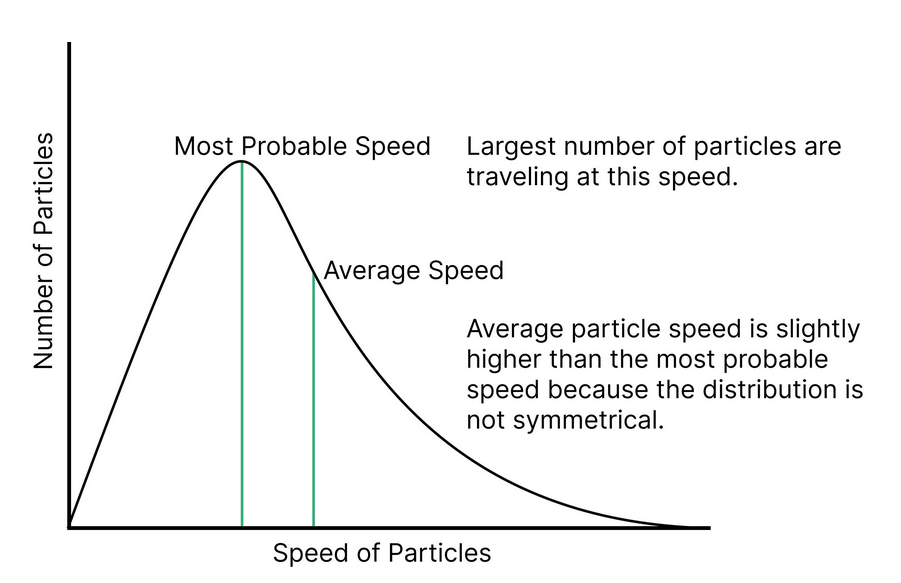
At the end of the 19th century, most scientists (like the influential Ernst Mach, 1838-1916, one of his main detractors) considered atoms merely as “convenient mathematical models,” not as real objects. Boltzmann, on the other hand, was convinced that atoms actually existed. To demonstrate this, he made a logical leap using statistics: he realized that it’s not necessary to know the trajectory of every single molecule to understand how a gas behaves, but rather to calculate the average of their collisions (see Figure 1). From these principles, he developed what later became Statistical Mechanics.


Figure 1 – Diagram of the statistical distribution of particles velocities in a gas (credits: Shutterstock)

particles statistic


Entropy and the ‘arrow of time’
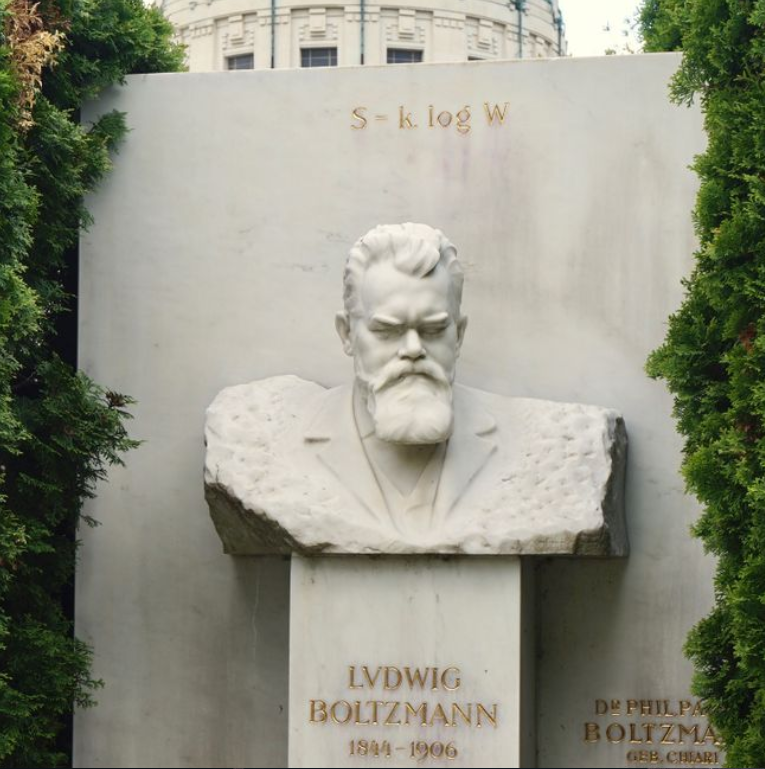
His masterpiece is the famous formula carved on his tomb in Vienna (Figure 2):
S = k log W
This equation connects the visible world (S, entropy) to the invisible world (W, the number of ways atoms can arrange themselves).
One interpretation of entropy is emergent temporal asymmetry: it explains why time only moves forward, not because of a law of mechanics, but because of probability. Heat flows from a hot body to a cold one simply because it is statistically more likely that energy will be dispersed in disorder rather than remain concentrated.
And similarly for the configurational states that hold matter together. Among many, we recall the famous example of the cup falling and breaking into pieces while we don’t observe the pieces spontaneously rejoining to form a whole cup. This happens because the whole cup is a very low-probability state (very ordered); the shattered cup is a very high-probability state (very disordered).
Boltzmann understood that the entire universe is just a gigantic transition to the most probable state.

A misunderstood genius, still underappreciated today
Boltzmann was fiercely attacked by his contemporaries. Scientists of the time, tied to a more continuous view of matter, mocked him. This implacable opposition, combined with a personality prone to depression, led him to commit suicide in 1906, in Duino, near Trieste.
Just a year earlier, in 1905, a young Albert Einstein had published a paper on Brownian motion that proved Boltzmann was right: atoms existed.
He was the first to understand that disorder is the driving force of the universe, and he transformed physics from a science of certainties to a science of probabilities. Without his statistical method and the constant (k) that characterizes it, Max Planck (1858-1947) would never have been able to launch the quantum revolution.
Boltzmann represents the bridge that took physics from the age of steam to the age of the atom and information.


Figure 2 – Ludwig Boltzmann

Ludwig Boltzmann

please, rate this post

References for laymen: What is energy?

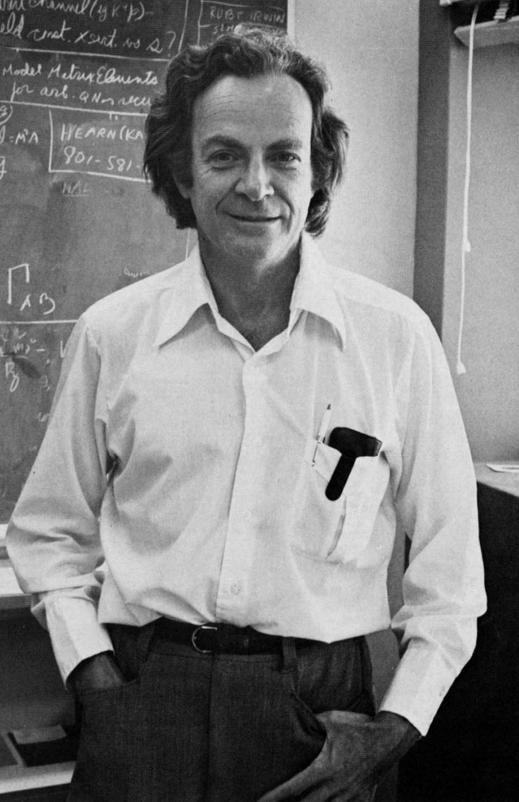
The great physicist Richard Feynman (1918-1988) honestly admitted that in modern physics we have no idea what energy ‘per se’ is. He described it as a kind of magical accounting: in the universe (or rather, in an isolated system), a lot of things happen, but at the end of each day, if we add up certain numbers characteristic of each event, the total is always the same. That number that never changes is energy. It is never created or destroyed, but always transformed.

The scholastic answer, “Energy is the capacity to do work” (given as known the concepts of work, force, etc.), is actually incorrect, because energy naturally tends to ‘spread’; that is, it prefers disorder. And as described by Ludwig Boltzmann (1844-1906), the measure of this disorder, called entropy, always increases in an isolated system. But since entropy also defines energy’s ability to do work, this ability actually always decreases, whereas energy is always conserved.

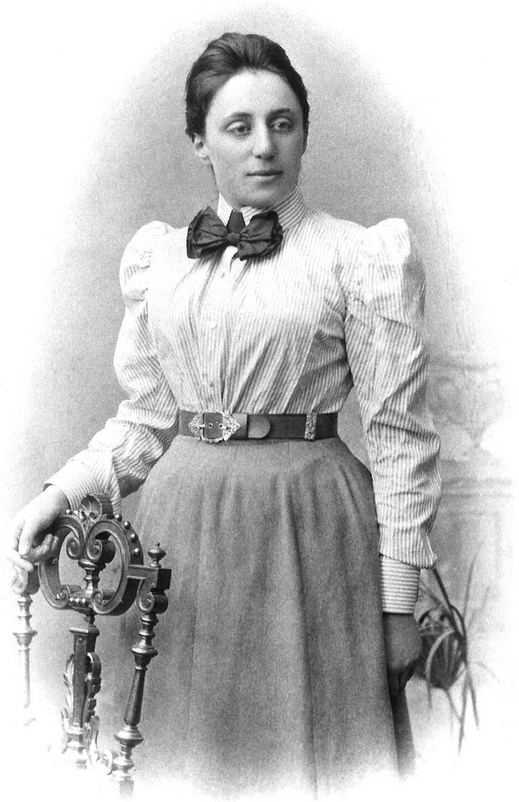
A more technical way to think about energy comes from Emmy Noether (1882-1935), who demonstrated that every conservation law in physics derives from a symmetry: energy is conserved because the Universe has a “translational time symmetry,” meaning the laws of physics remain the same as time passes, and the quantity that mathematically must remain constant is energy. In these terms, one could say that energy is time.

One way to calculate energy is the one defined by Einstein (see Einstein’s formula for energy), even if we don’t know what ‘stuff’ it’s made of. Simply put: even if an object is still and tiny, it hides a monstrous amount of energy within itself thanks to its mass (the constant of proportionality c² is a really huge number). And if it then begins to move due to external action, this energy increases.

Conclusion
We could define energy as the invisible ‘engine’ of reality. We can’t ‘touch’ it, but it ensures that the universe keeps its accounts in order (including the symmetry of time). Every time we do something, or even simply exist, we participate in this immense exchange of ‘tokens’ that has been going on ‘forever’.


Richard Feynman e Emmy Noether

Richard FeynmanEmmy Noether

please, rate this post

The Boltzmann Brain – an epistemological provocation

The Boltzmann Brain  (Ludwig Boltzmann, 1844-1906) is one of the most unsettling thought experiments in modern physics, sitting right at the intersection of thermodynamics and the philosophy of mind. It suggests a provocative paradox: in an infinite universe governed by entropy, it is statistically more likely for a single, self-aware brain to spontaneously flicker into existence -complete with false memories of a life it never lived- than for an entire structured universe to evolve over billions of years.
At its core, this concept challenges our very definition of reality. If we are more likely to be a random ‘fluctuation’ in a sea of chaos than biological products of a long evolutionary chain, how can we trust our observations of the cosmos? It’s not just a puzzle about physics; it’s a fundamental question of epistemology: how do we know we are truly part of a stable universe and not just a fleeting thought in the void?

It’s impossible not to think about the brilliance of The Matrix.
But while The Matrix asks us to choose between a comfortable lie and a harsh truth, the Boltzmann Brain suggests that truth might not be a structure at all, but rather an accidental flash of order in an ocean of nothingness. In both scenarios, the epistemological question remains the same: if your senses and memories were the only data you possessed, how could you ever prove you aren’t just alone in a timeless void?


blue red

please, rate this post

Einstein 1916: Emission and Absorption of Radiation in the Quantum Theory

This work is a further study of Albert Einstein’s article, “Emission and Absorption of Radiation in the Quantum Theory” (Strahlungs Emission und Absorption nach der Quantentheorie). A brilliant work published in 1916.
This work of mine is written in Italian.

pdf_ita  Brussi 2023_Einstein 1916 Emissione e assorbimento di radiazione

ABSTRACT
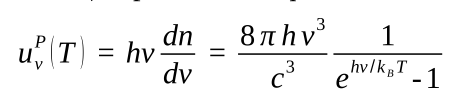
Albert Einstein’s study, “Emission and Absorption of Radiation According to Quantum Theory,” [Einstein, 1916], proposed an original interpretation for the probabilities of exchanges between atomic energy levels, predicting spontaneous emissions, as well as absorption and radiation-stimulated emissions, from molecules in thermodynamic equilibrium. This study made the coefficient associated with spontaneous emissions Aji, the absorption coefficient Bij, and the coefficient associated with stimulated emissions Bji famous; it also laid the theoretical foundation for the development of lasers.
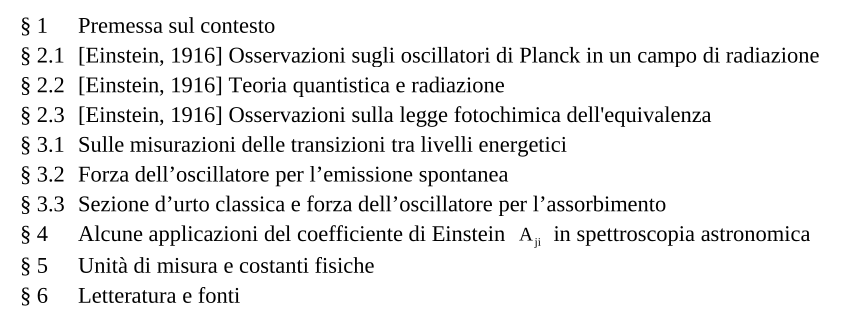
In-depth analysis: a paraphrase of the conjectures in Einstein’s original publication, an in-depth analysis of the parameter associated with the coefficients called the oscillator strength (derived with different procedures for both spontaneous emission and absorption of radiation), and some examples of the use of Einstein’s coefficient Aji in astronomical spectroscopy.


Brussi 2023_Einstein 1916 Emissione e assorbimento di radiazione

please, rate this post