A pure mathematical version of the Clay Mathematics Institute’s Navier-Stokes Millennium Problem

Abstract
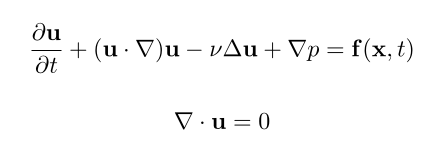
This report provides a rigorous transition from the physical formulation of the incompressible Navier-Stokes equations to their pure mathematical representation as defined by the Clay Mathematics Institute for the Millennium Prize Problems. We detail the physical meaning of each term in the classical equations and subsequently reformulate the problem strictly in the language of partial differential equations (PDEs) and operator theory, establishing the axiomatic constraints that govern the variables and parameters of the system.


pdfBrussi 2026_Navier-Stokes Millennium Problem


Version uploaded to Zenodo: link DOI – zenodo.21852870


Navier-Stokes Millennium Problem

please, rate this post

Mathematical and historical foundations of Extended Theories of Gravity (ETG)

A short paper, in english, on a fascinating development of General Relativity.

Abstract
Extended Theories of Gravity (ETG) represent a prominent framework in modern theoretical physics and cosmology, aimed at modifying or extending Albert Einstein’s General Relativity to address open phenomenological questions at both ultraviolet (early universe) and infrared (galactic and cosmological) scales.

pdf Brussi 2026 Mathematical and historical foundations of ETG (305 KB)

ETG

please, rate this post

Ludwig Boltzmann, an underrated scientist

Many are familiar with Albert Einstein (1879-1955) or Isaac Newton (1643-1727), but few know that the profound architecture of the reality we live in today was designed by Ludwig Boltzmann (1844-1906).
If today we naturally accept that everything around us is made of atoms, we have him to thank. But the price Boltzmann paid for this insight was extremely high: intellectual solitude and, ultimately, his life.

The Bet on Atoms
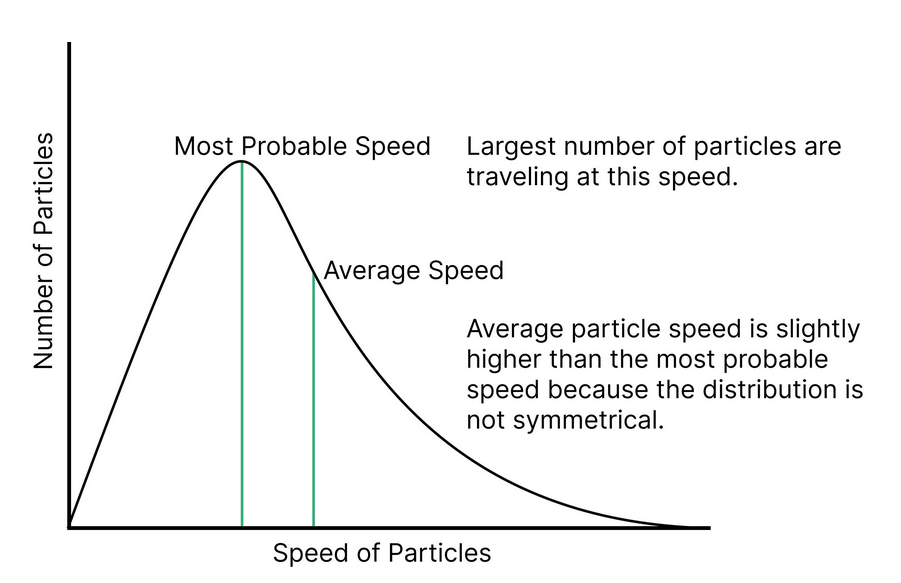
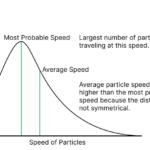
At the end of the 19th century, most scientists (like the influential Ernst Mach, 1838-1916, one of his main detractors) considered atoms merely as “convenient mathematical models,” not as real objects. Boltzmann, on the other hand, was convinced that atoms actually existed. To demonstrate this, he made a logical leap using statistics: he realized that it’s not necessary to know the trajectory of every single molecule to understand how a gas behaves, but rather to calculate the average of their collisions (see Figure 1). From these principles, he developed what later became Statistical Mechanics.


Figure 1 – Diagram of the statistical distribution of particles velocities in a gas (credits: Shutterstock)
particles statistic


Entropy and the ‘arrow of time’
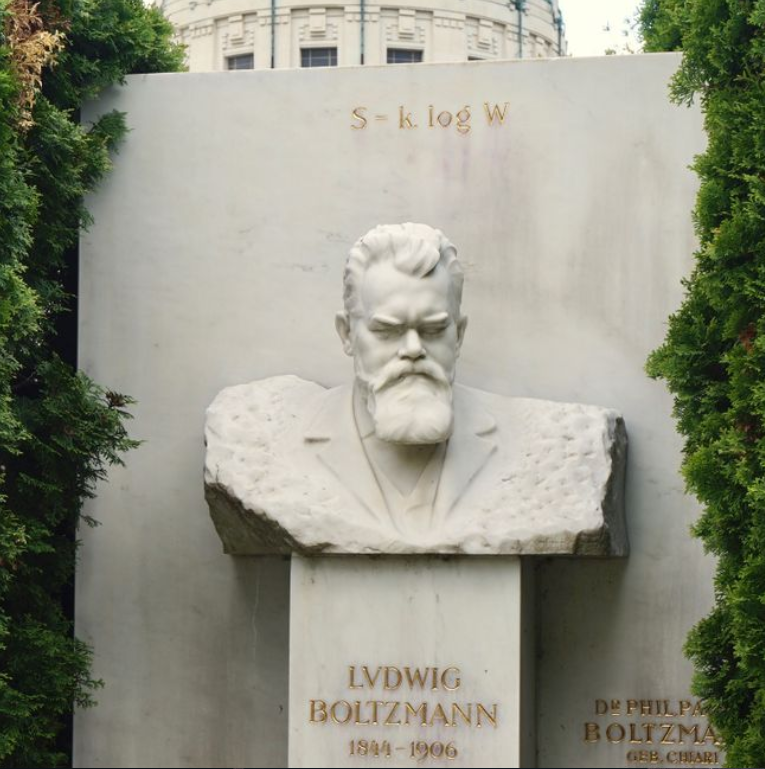
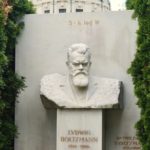
His masterpiece is the famous formula carved on his tomb in Vienna (Figure 2):
S = k log W
This equation connects the visible world (S, entropy) to the invisible world (W, the number of ways atoms can arrange themselves).
One interpretation of entropy is emergent temporal asymmetry: it explains why time only moves forward, not because of a law of mechanics, but because of probability. Heat flows from a hot body to a cold one simply because it is statistically more likely that energy will be dispersed in disorder rather than remain concentrated.
And similarly for the configurational states that hold matter together. Among many, we recall the famous example of the cup falling and breaking into pieces while we don’t observe the pieces spontaneously rejoining to form a whole cup. This happens because the whole cup is a very low-probability state (very ordered); the shattered cup is a very high-probability state (very disordered).
Boltzmann understood that the entire universe is just a gigantic transition to the most probable state.

A misunderstood genius, still underappreciated today
Boltzmann was fiercely attacked by his contemporaries. Scientists of the time, tied to a more continuous view of matter, mocked him. This implacable opposition, combined with a personality prone to depression, led him to commit suicide in 1906, in Duino, near Trieste.
Just a year earlier, in 1905, a young Albert Einstein had published a paper on Brownian motion that proved Boltzmann was right: atoms existed.
He was the first to understand that disorder is the driving force of the universe, and he transformed physics from a science of certainties to a science of probabilities. Without his statistical method and the constant (k) that characterizes it, Max Planck (1858-1947) would never have been able to launch the quantum revolution.
Boltzmann represents the bridge that took physics from the age of steam to the age of the atom and information.


Figure 2 – Ludwig Boltzmann
Ludwig Boltzmann

please, rate this post

Leonard Susskind about the c constant

An in-depth analysis by Leonard Susskind of the constant c, commonly referred to as the “speed of light.” It is essentially a collection of familiar concepts, but reinterpreted in an illuminating way, that are well worth considering.


please, rate this post

Odifreddi’s Lucretius

Perhaps I will not add anything about an author who has demonstrated not only competence but also genuine originality in many of his works, but I want to write this review, trying not to slip into apologetics.
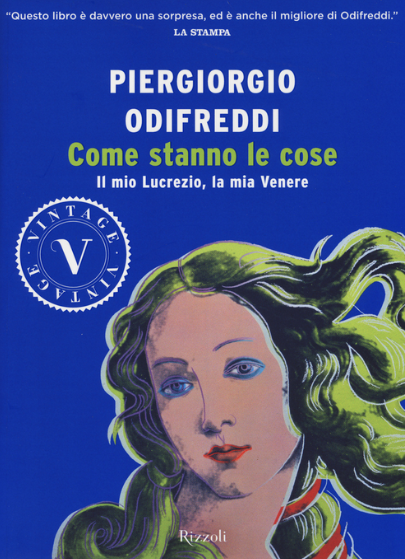
I am referring to Come stanno le cose. Il mio Lucrezio, la mia Venere, an essay (published by Rizzoli, 2014) by Piergiorgio Odifreddi (1950–), who, in a new complete translation of the poem De rerum natura by Titus Lucretius Carus (98/94–50/55), provides a version in modern words and meanings—not only to make it easier to understand ideas conceived two millennia ago, but above all to highlight their incredible modernity. An excellent conception of the work and an excellent execution, in which the translation on the right-hand pages and the interpretation on the facing pages make it possible to appreciate both the ideas that today we would call scientific and the philosophical visions of a great author.

In high school (a scientific high school) De rerum natura was the subject of a (mild) in-depth study (though we were required to buy a book about the poem, which I still keep). But our teacher was not able to convey its greatness and meanings, surely because he had not understood them himself, with the partial excuse that the ‘literal’ translation by someone who, perhaps like him, being wholly incompetent in scientific matters, was not even able to sense how, in recent centuries, science has confirmed some old intuitions, obviously at the level of general principles.

Odifreddi’s work, therefore, not only restores Lucretius to his full stature, but also tries to fill a gap that is perhaps typically Italian, where scientific culture has always been little widespread and little valued. This has not prevented excellence, of course, but Italians’ general lack of competence on scientific and technical topics is limiting in a modern world founded above all on technology. I realize I do not know the situation well in other countries, but my thought was also tied to the ‘historical responsibility’ of being part of a land that is a ‘cradle of civilization’ and of thought, now reduced to a third-rate caricature in geo-economic and political balances, unworthy of a cultural heritage that has no comparable equal in the world. A heritage that must be rediscovered, overcoming the obscurantist inertia of a ruling class inadequate to its role. And I am not referring only to the current one, except in the sense that, being in office, they are the only ones who could do more than a little to change things.

Perhaps it is a small gesture, Odifreddi’s, but it is an excellent achievement that deserves to be known.


Odifreddi Lucrezio

please, rate this post

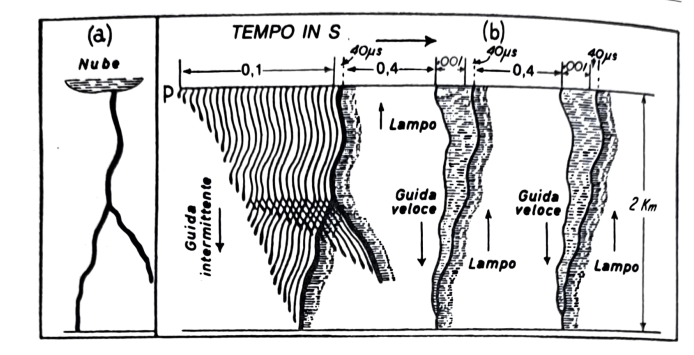
How lightning works

An interesting explanation is given in Ottavio Vittori’s excellent book L’atmosfera del pianeta Terra (Zanichelli, 1992), from which the introductory chapter on this powerful electrical phenomenon is attached with the best intentions.
It’s written in italian.

pdf  Vittori 1992_L’atmosfera del pianeta Terra


Lightnings

please, rate this post

A sharp presentation of a quantum mechanics course

Not all professors are so explicit in presenting a quantum mechanics course, which is objectively very challenging. A medal for intellectual honesty to this professor!
(yes, it’s an old video, but it’s still worth watching ; )

link  Presentation of a quantum mechanics course

please, rate this post

The three-body problem and the five Lagrangian points

Joseph-Louis Lagrange (1736-1813) was a great mathematician of the 18th century. His main studies on mechanics led him to tackle the gravitational three-body problem, which, however, remains unsolved to this day because the system is inherently chaotic and unpredictable in the long term, as small initial variations cause drastically different results.
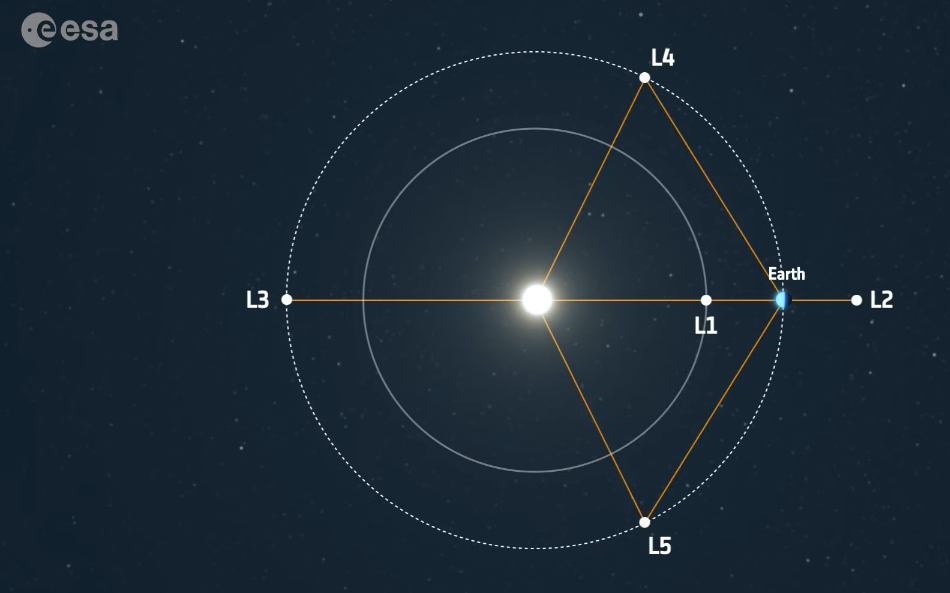
Lagrange found the equilibrium solutions (the five Lagrangian points, see figure taken from the ESA website) for the system in the simplified yet highly interesting case where the third body has negligible mass compared to the other two (e.g., the Sun, a planet, and an asteroid or an artificial satellite). The first three points (L1, L2, L3) had already been found by Leonhard Euler (1707-1783), another huge mathematician of the 18th century, while Lagrange found the so-called ‘triangular’ points (L4, L5), because they form perfect equilateral triangles with the two main bodies.
For details about these points, please refer to the easy explanations on the
link  ESA (European Space Agency) website.

Obviously, Lagrange could never have known about the evidence supporting his conjecture (it was only in 1906 that astronomers confirmed his theory by discovering Trojan asteroids captured at points L4 and L5 of Jupiter’s orbit) or its current usefulness in positioning our space exploration vehicles.
Thanks to their ‘gravitational stability’, which saves positioning energy (and in the case of L2 also provides partial shielding from the Sun), it is conceivable that, in the future of space exploration, advanced bases for deep space exploration will be located at Lagrangian points.


The 5 Lagrangian points, from the link  ESA (European Space Agency) website; the orbits of points L1 and L2 are not to scale, the distance from Earth is about 1/100 of the radius of Earth’s orbit.

Lagrangian points

please, rate this post

Schopenhauer on truth

Der Wahrheit ist immer nur ein kurzes Siegesfest beschieden, zwischen den beiden langen Zeiträumen, wo sie als paradox verdammt und als trivial geringgeschätzt wird.

“Truth is always granted only a brief victory celebration, between the two long periods of time where it is condemned as paradoxical and dismissed as trivial.”

Arthur Schopenhauer, Die Welt als Wille und Vorstellung, Leipzig: F.A. Brockhaus (1819)

An expression with an epistemological, not just philosophical, flavor. Schopenhauer’s thought, in fact, is dominated by cosmic pessimism, arguing that reality is driven by a blind and irrational force, the Will to Live, a source of perpetual suffering, since to will is to desire, and to desire means to lack and suffer. For him, existence is an oscillation between pain and boredom, and the paths to liberation are temporary (art) or permanent (compassion and asceticism), and deny the will itself, transforming non-will into the ultimate goal.

please, rate this post