The error function as an integration trick

The error function, erf(x), represents a statistical function, but it can also be used as an integration trick in the case of complex exponentials, which occur fairly frequently in the study of physics, for example, in differential equations describing heat propagation. It is also used in quantum mechanics to describe particles represented by a wave function, and in astrophysics for the spectroscopic analysis of spectral lines, as in the examples discussed in detail (in english and italian translation).

pdf  Brussi 2026_The error function as an integration trick

pdf_ita  Brussi 2026_La funzione di errore come trucco di integrazione


error function

please, rate this post

How lightning works

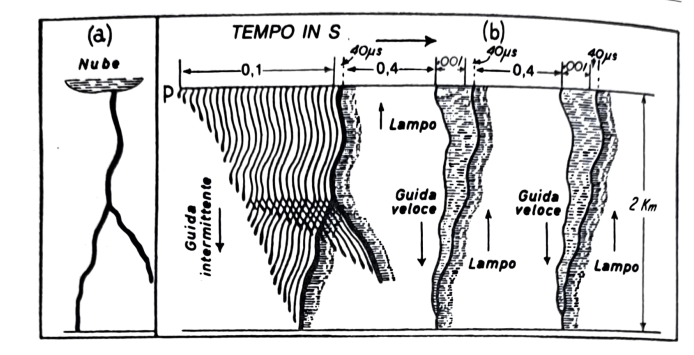
An interesting explanation is given in Ottavio Vittori’s excellent book L’atmosfera del pianeta Terra (Zanichelli, 1992), from which the introductory chapter on this powerful electrical phenomenon is attached with the best intentions.
It’s written in italian.

pdf  Vittori 1992_L’atmosfera del pianeta Terra


Lightnings

please, rate this post

Olbers’ paradox and the dark night sky

Why is the night sky dark?
If universe were infinite, eternal, and static, as Giordano Bruno (1548-1600) claimed, as did cosmology until the early 20th century, adding that it is also populated by stars in a homogeneous manner, the night sky should be bright and not dark. This contradiction was already noted by Johannes Kepler (1571-1630) in 1610 in Dissertatio cum Nuncio Sidereo.
However, the principle was clearly formulated in 1826 by Einrich Wilhelm Olbers (1758-1840), who mathematically demonstrated (see below, optional reasoning which can be skipped) why the night sky should shine according to the cosmology of the time, highlighting a paradox with respect to observation.

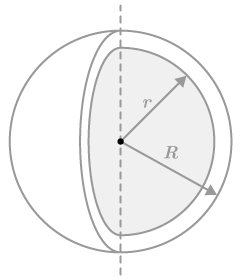
Imagining the universe as consisting of spherical shells concentric with respect to our point of observation (see Figure 1), the intensity of radiation received (flux  f ) from a source ( L ) at a distance ( r ) is inversely proportional to the square of the distance:
[1]    f = L / 4 π r²
The number of sources contained in the shell is proportional to the volume, which increases with the square of the distance (by infinitesimal increments
dr = R – r  with reference to Figure 1):
[2]    dn ∝ dV ≈ 4 π r² dr
Therefore, the effects of [1] and [2] compensate each other and each shell contributes with the same intensity, regardless of distance.
The infinitesimal intensity ( dI ) coming from the infinitesimal shell, multiplying [1] and [2], is:
[3]    dI = f dn = n L dr
Integrating [3] gives the total intensity:
[4]    I =∫₀ᴿ n L dr = n L R
Therefore, for  R → ∞, the intensity [4] should become infinite. So something is wrong with the reasoning (hence the paradox).


Figure 1 – sketch of a spherical shell

spherical shell


The observation of the dark night sky is explained in modern terms (based on cosmological standard model) because the universe has existed for a finite time (Big Bang hypothesis) and is expanding (interpretation of the redshift of radiation from remote sources).
In the first case, it is considered that the light from remote sources, which has a finite speed, simply has not reached us yet.

In the second case, redshift, or the shift of light towards longer wavelengths (for example, in the infrared band, beyond the range visible to the eye), prevents the observation of remote sources.
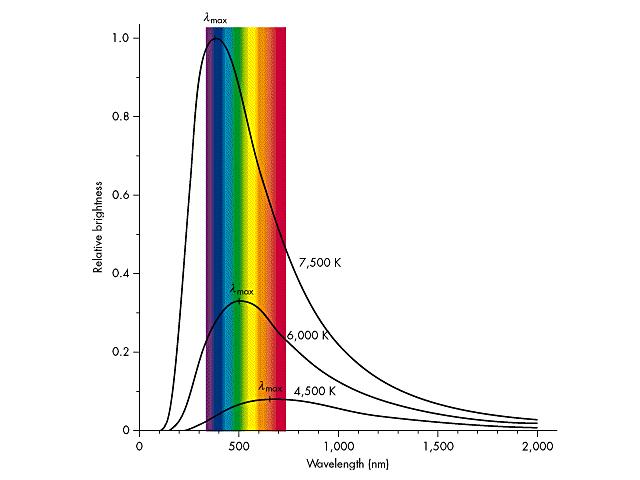
It should also be remembered that the distribution of the intensity of radiation from stellar sources follows a Planckian curve (see Figure 3), which has its maximum in the visible light band. In other words, there are no significant intensities of radiation in a typical stellar source that, moving due to the effect of redshift, could affect this visible band.
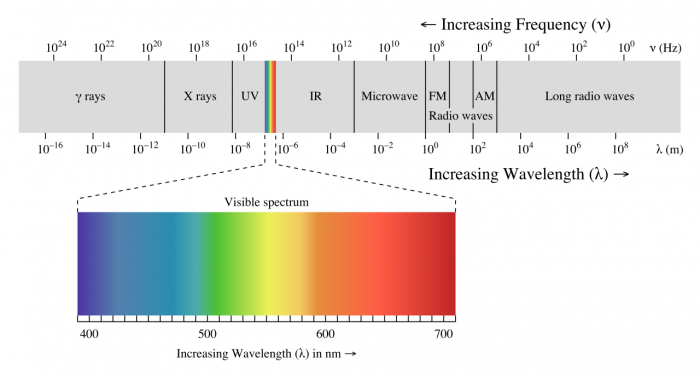
In fact, we emphasize that the range of radiation visible to our eyes is very small compared to the entire spectrum of radiation, as shown in Figure 2.
In reality, redshift alone would explain the dark night sky, even if the universe were infinite and without assuming a Big Bang. And even without expansion, if the observed redshift had a different cause.


Figure 2 – full spectrum of radiation with visible band

fulll spectrum


Figure 3 – A sketch of a Planckian functions of brightness (intensity of radiation emitted per unit solid angle) for stellar sources with different surface temperatures. That of the Sun is approximately 5700 K.

blackbody

please, rate this post

The Rayleigh scattering and the blue sky

Why is the daytime sky blue?
We need to examine a type of scattering that affects photons from solar radiation when they interact with the molecules that make up the atmosphere, namely nitrogen and oxygen (99% of the components).
This is Rayleigh scattering (named after Nobel Prize winner John William Strutt Rayleigh, 1842-1919), which affects particles smaller than the wavelength of the incident radiation. It is an elastic scattering, so the wavelength of the same radiation is not changed.
We are dealing with photons, but the formula was developed on the basis of classical electromagnetic theory, not quantum theory (which was created after Rayleigh’s death).


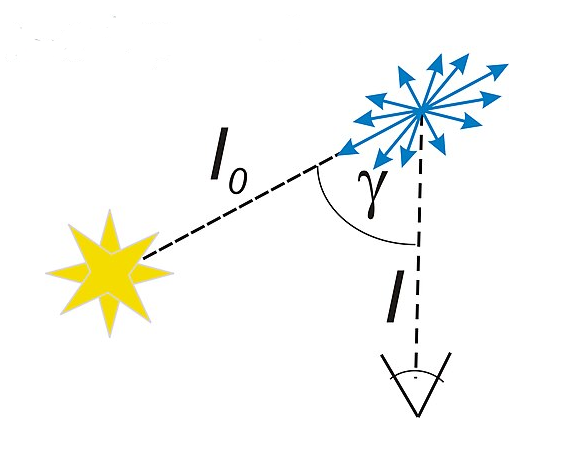
Figure 1 – Angular dependence of Rayleigh Scattering
(copyright MLisandra, CC BY-SA 4.0, via Wikimedia Commons, here without the formula inscription)
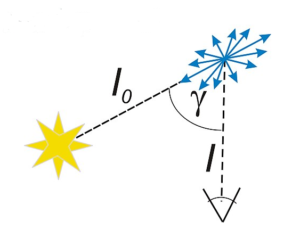

For the explanation we are looking for, the Rayleigh scattering formula can be simplified as follows (see also Figure 1):
[1]    I ~ I₀ (1+cos²γ) / λ⁴
where  I  is the intensity of the scattered radiation,  I₀  is the intensity of the incident radiation with wavelength  λ ,  γ  is the scattering angle of the incident radiation.

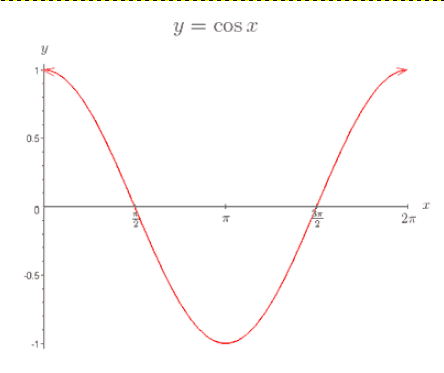
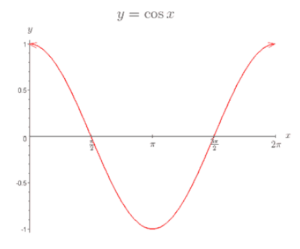
We can immediately see that the angle where the intensity  [1]  is lowest is the right angle ( π/2 ), where the cosine is zero (see Figure 2), meaning that the sky is darkest (the blue is most intense) at an angle of 90° to the direction of the Sun.
Furthermore, the dependence on the inverse of the fourth power of  λ suggests that the effects for different wavelengths are significantly different. In fact, blue light is scattered much more than red light, which has a longer wavelength (see Figure 3), making the sky blue. Even shorter wavelengths, such as those of violet, are less intense at source and do not contribute significantly.
At dawn and dusk, blue light is highly scattered by the greater layer of atmosphere it passes through, together with yellow and green light, so red/orange light dominates.

In the case of smaller particles, the cross section and refractive index of the particle are considered, but even if atmospheric gas molecules are treated as point sources, in this case the effects depend on their polarizability due to incident radiation. Those who take photographs using a polarizing filter are familiar with this phenomenon: in fact, by adjusting the filter effect and therefore the polarization, the sky can even become completely black at 90° to the Sun, which can be creative but not very realistic!


Figure 2 – cosine function behaviour
cosine function

Figure 3 – visible band of radiation

visible band of radiation


See also Mie scattering and white clouds.

please, rate this post

Eddington luminosity and limits to stellar growth

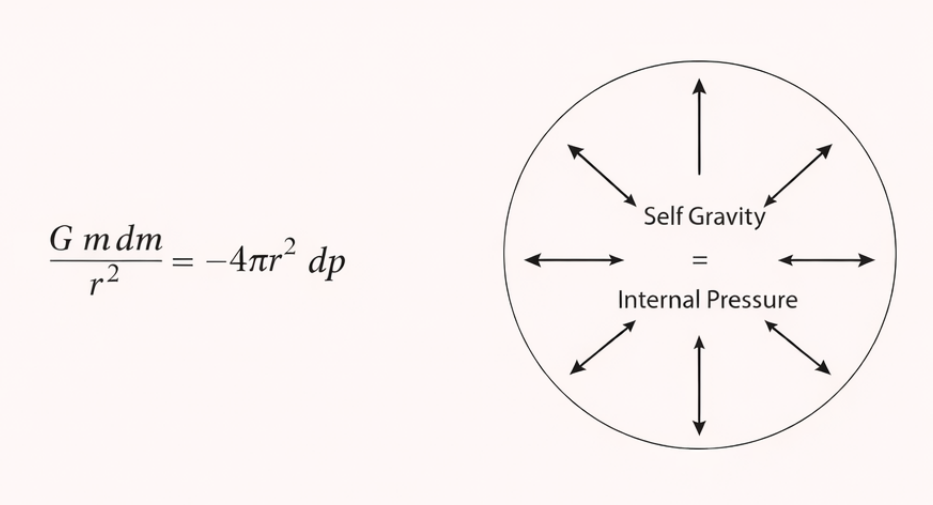
The Eddington luminosity (Lₑ) (named after Arthur Stanley Eddington, 1882-1944), also known as the Eddington limit, is the growth limit of a structure that is in hydrostatic equilibrium (see Figure 1), balancing the outward radiation pressure with the inward gravitational pull.


Figure 1 – Hydrostatic equilibrium


The relationship for the luminosity limit can be easily derived, obtaining:
[1]    L ≤ 4π c G M / k = Lₑ
where  G  is the universal gravitational constant,  M  is the mass of the object,  c  is the speed of light, and  k  is the opacity (ability to absorb radiation) of the material that makes up the object.
As a function of solar parameters, in the case of the model consisting of ionized hydrogen, [1] can be expressed as:
[2]    Lₑ ≈ 3.2 * 10⁴ (M/M๏) L๏
where   M๏   and   L๏   are the mass and luminosity of the Sun.

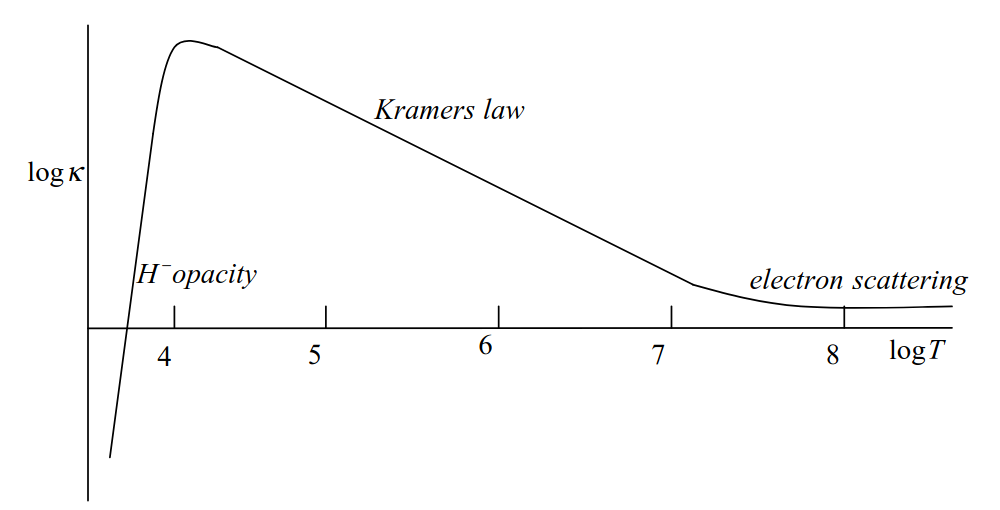
In the very hot core of massive stars (or in accretion disks of black holes), opacity is independent of frequency and temperature, is related to Thomson scattering (see Thomson scattering on Wikipedia for more informations) of free electrons, and can be expressed as:
[3]    kₑₛ = σₜ nₑ / ρ
where σₜ is the Thomson cross section for electrons, nₑ is the number density of electrons, and  ρ  is the density of the medium.
To consider the more general case of models also consisting of helium and metals, the general relationship is expressed as a function of the mass fraction (X) of hydrogen, and the  [3] becomes:
[4]    kₑₛ = σₜ (1+X) / 2 mₚ ≈ 0.2 (1+X)    cm² / gr
where  mₚ  is the mass of the proton.
Therefore, in the case of a model consisting only of helium, Eddington luminosity would double (with   X=0 ,  [4]  is halved and  [1]  is doubled).
Relationships can also be derived for cases of models that are not fully ionized or colder (for less massive stars), or for highly energetic radiation (e.g., gamma rays as in black hole accretion disks), but these are beyond the scope of this note.

What is notable is that this physical limit explains why we do not observe infinitely large stars; beyond a certain mass limit, the luminosity is such that it disrupts the star.
The Eddington luminosity also defines the maximum rate at which a black hole can grow: if matter falls too quickly, the light emitted repels it back.

please, rate this post

Why do stars twinkle at night and planets do not?

planets do not twinkle
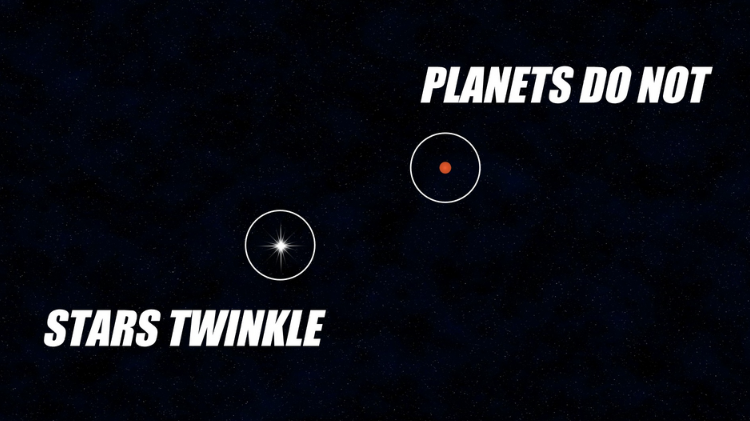
This fact, known for millennia, allows even the layman to immediately distinguish in the night sky one of the planets of the Solar System (Venus, Mars, Jupiter, Saturn) from the stars with the naked eye.
These light sources, observed from the Earth’s surface, exhibit two main characteristic behaviors due to the same cause, atmospheric turbulence:
– slight oscillations in position (appreciable with good binoculars or a small telescope)
– intensity twinkling (typically only stars).
Other effects, especially when the source is close to the horizon, are: chromatic twinkling (color changes), atmospheric extinction (decrease in brightness), reddening, and twinkling of the planets.
Atmospheric turbulence at low altitudes (the first tens or hundreds of meters) is responsible for positional oscillations, together with turbulence at medium altitudes (6-8 km) where air cells of different temperatures and densities mix, while turbulence near the tropopause (8-12 km) associated with jet streams is responsible for scintillation.

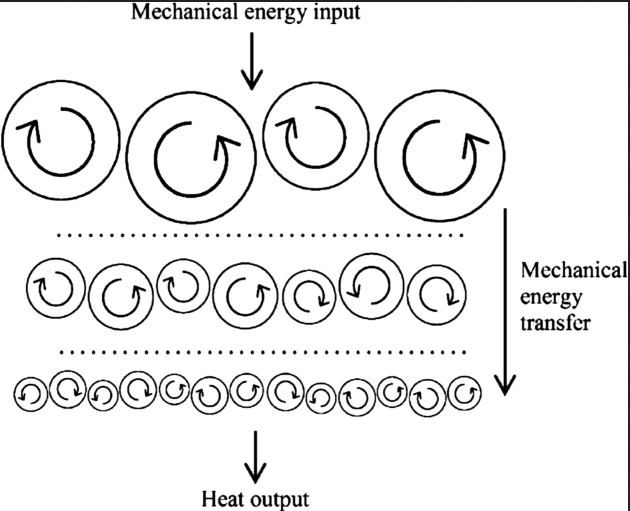
It is the optical dimensions of the sources that make the difference in the scintillation, based on their interaction with turbulence cells, which also vary in size. Jet streams determine large cells, ranging from tens to hundreds of meters, but turbulence follows Kolmogorov’s cascade model (see Figure 1), dissipating the initial kinetic energy into increasingly smaller vortices, down to the order of centimeters or millimeters, eventually dissipating into heat. It is precisely these microcells that deflect the point-like light from stellar sources, but they have a mediated effect in the case of optically larger sources such as planets, which involve multiple cells. The final effect is the stabilization of the source’s light, which therefore appears non-twinkling.


Figure 1 – An illustrative sketch of turbulence transformation according to Kolmogorov’s cascade model

turbolence

please, rate this post

Brief on Kramers’ Opacity Law in Stellar Astrophysics

In stellar astrophysics, opacity  ( k ) is a measure of a material’s resistance to the flow of radiative energy. One analytical descriptions of this phenomenon is Kramers’ opacity law, a power-law relation derived from atomic physics that characterizes how stellar matter interacts with radiation under specific thermodynamic conditions.

pdf  Brussi 2026_Brief on Kramers’ Opacity Law in Stellar Astrophysics


please, rate this post

Ole Rømer and the finite speed of light

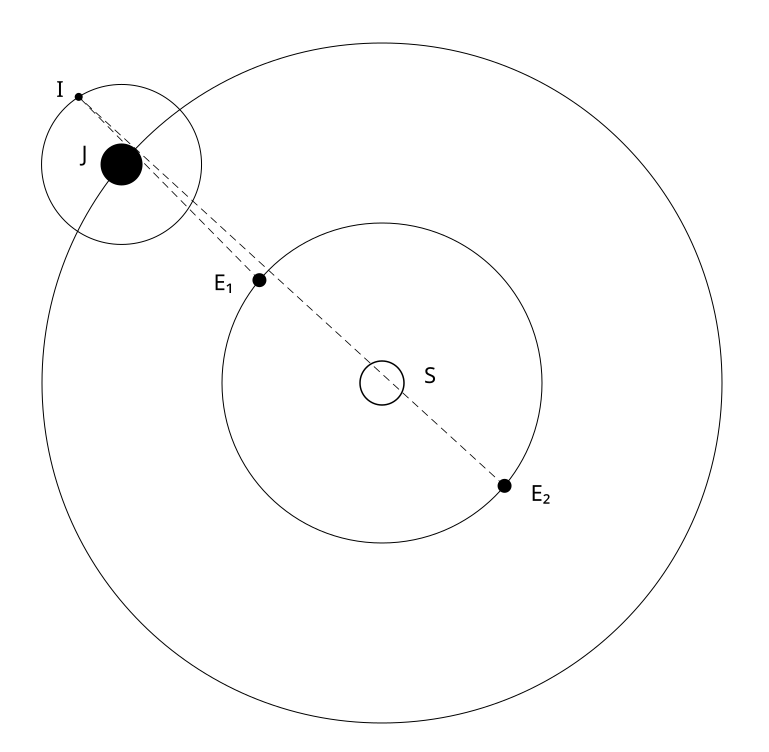
The first to observe that the propagation of light was not instantaneous was the astronomer Giovanni Domenico Cassini (1625-1712); the first to estimate its speed, in 1676, was the Danish astronomer Ole Christensen Rømer (1644-1710), both based their observations on the solar system.

pdf  Brussi 2026_Ole Rømer and the finite speed of light


please, rate this post

My thesis work

My thesis work (written in italian) is published in the University of Padova archive:
pdf_ita  Brussi 2025_Epistemology of time and cosmological interpretations

As an appendix to the same thesis I put a first development draft of the non-standard framework, which, after significant revisions, later became my work
link  The URD Framework.


Abstract
The aims of this study on time are first to explore its ontological meaning in the historical developments that have accompanied its interpretative evolution, and then to examine some theoretical critical issues raised by recent literature. With some original theses, some alternative explanations for the expansion of the universe are then analyzed, which the current interpretation claims to be observed experimentally, by means of a model based on the ‘specific time’ of photons as an alternative to the ‘universal time’. Furthermore, it is hypothesized a model that considers the presence of an energy density in the cosmic fluid (called aether) that interacts with the incident radiation, thus determining a redshift effect in the wavelength, or an even longer time for the same radiation to diffuse. The consistency of ‘specific time’ has been verified with Minkowski spacetime, with Einstein’s principles of special relativity, and with Friedman’s equations of cosmic dynamics. Having demonstrated the fallacy of this ‘specific time’ hypothesis, the positive conclusion is that there is no need to postulate a universal time. Once one is defined, its uniqueness or universality can be demonstrated (within the limits of the adopted models). To complement the study, possible causes of the redshift, alternative to the standard cosmological model, were analyzed. It has been taken in consideration the hypothesis that the same universe behaves like a black body, emitting a radiation (the cosmic microwave radiation) that can interact with the observed photons coming from remote sources, attenuating their energy and determining their redshift. A cross section for photons, and a model for photon-photon interactions that respects the law of conservation of energy have therefore been hypothesized. As a basis for the conjectures, direct observational evidence was considered, not interpreted by means of theories, obtaining (from the comparison with other standard candles) better distance estimates than the official ones based on Hubble’s law. This addendum is included as an Annex, believing that the same conjectures and some original models can represent a reference for future in-depth studies.

The work is written in Italian (1.8 MB):

pdf_ita  Brussi 2025_Epistemologia del tempo e interpretazioni cosmologiche

please, rate this post