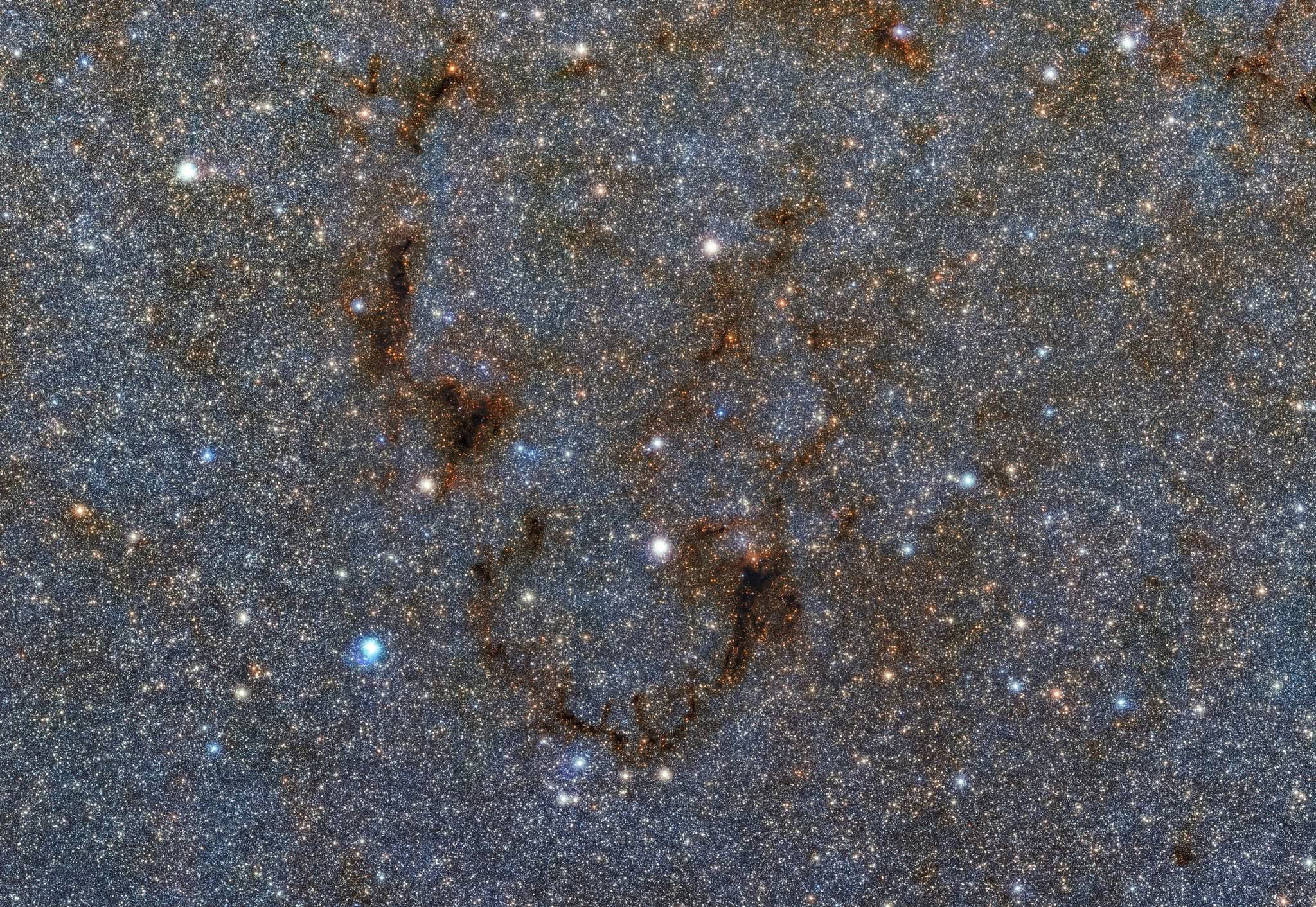
Milky Way bulge

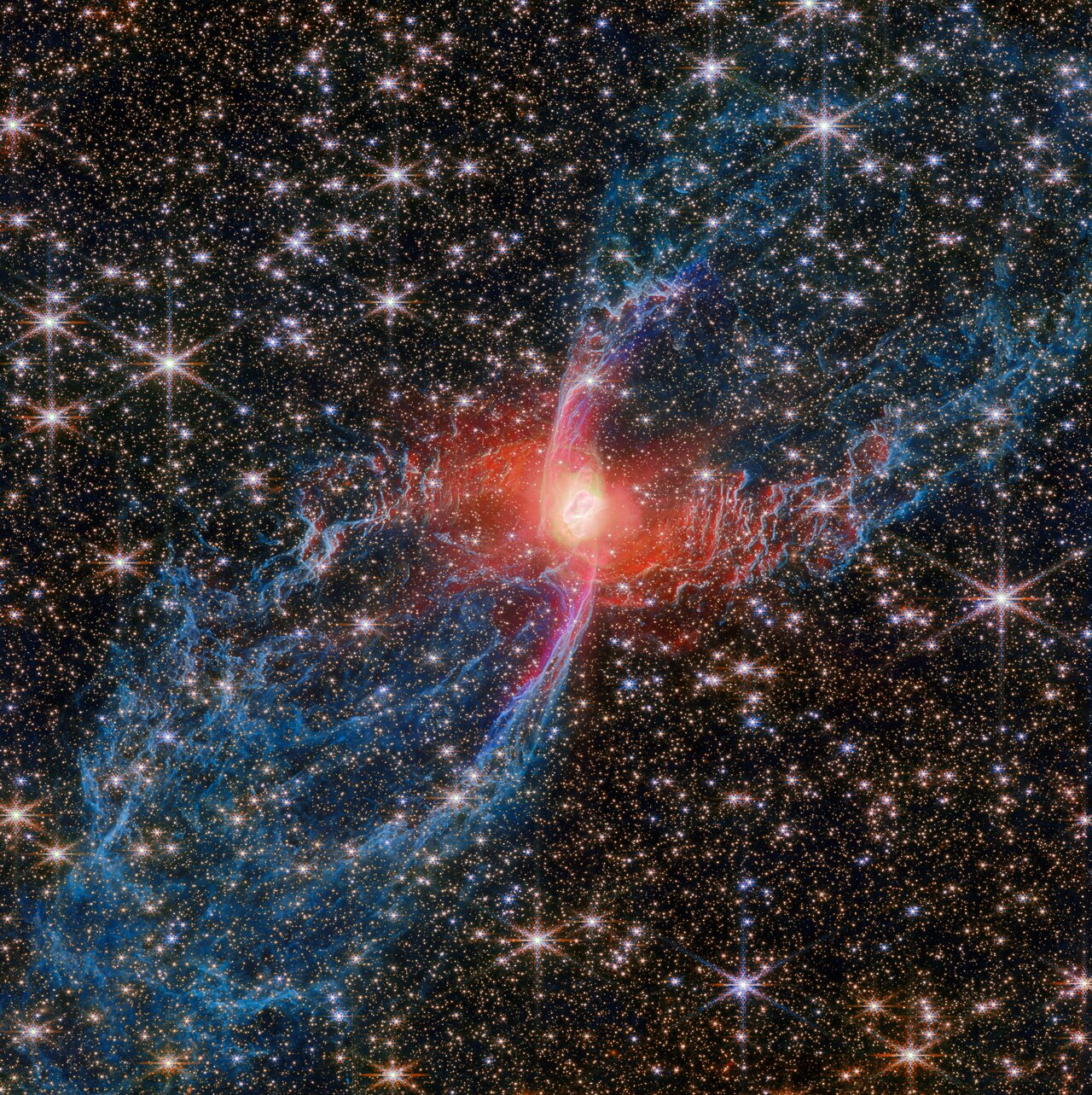
The galactic bulge is indeed an incredibly dense region. While the solar neighborhood has a stellar density of roughly about 1 star every 250 cubic light-years), the central bulge reaches densities of millions of stars per cubic light-year. In the densest parts, stars can be separated by only a few light-days or light-weeks, compared to the 4+ light-years between us and Proxima Centauri.
 

link  read more on Black Hole X Channel

please, rate this post
Stars like gas molecules

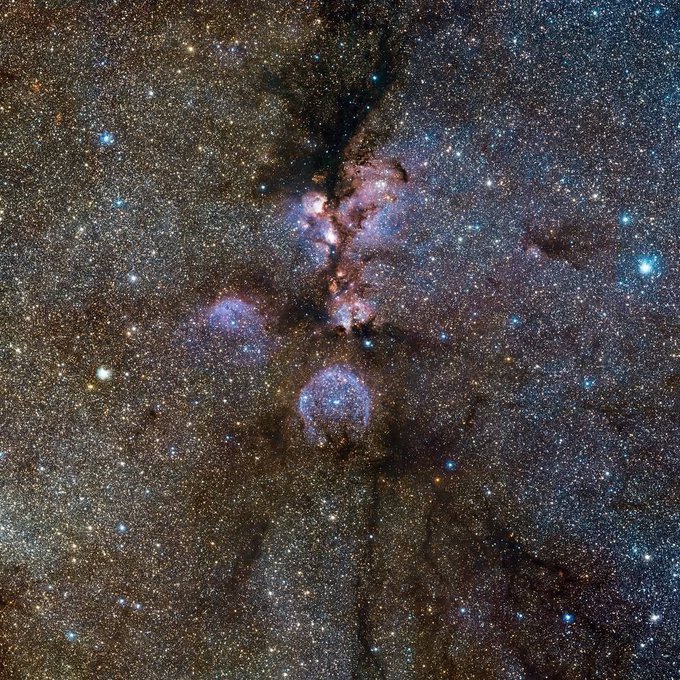
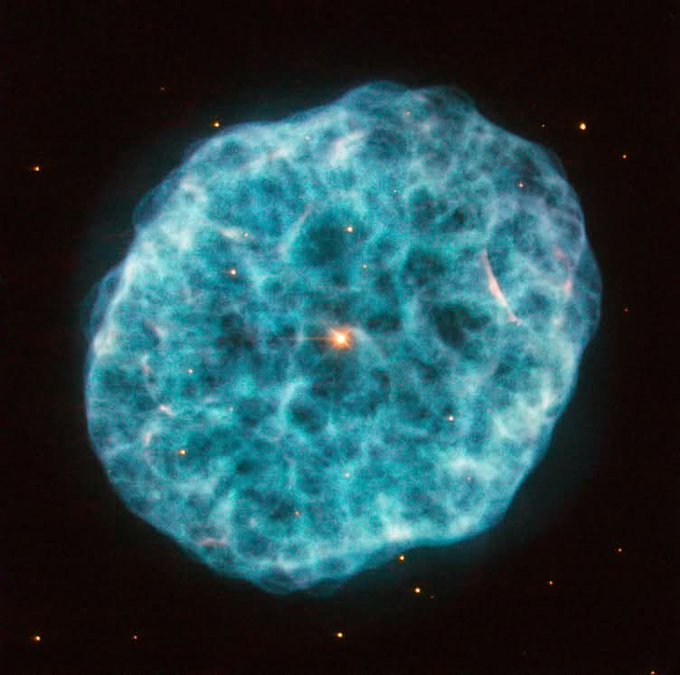
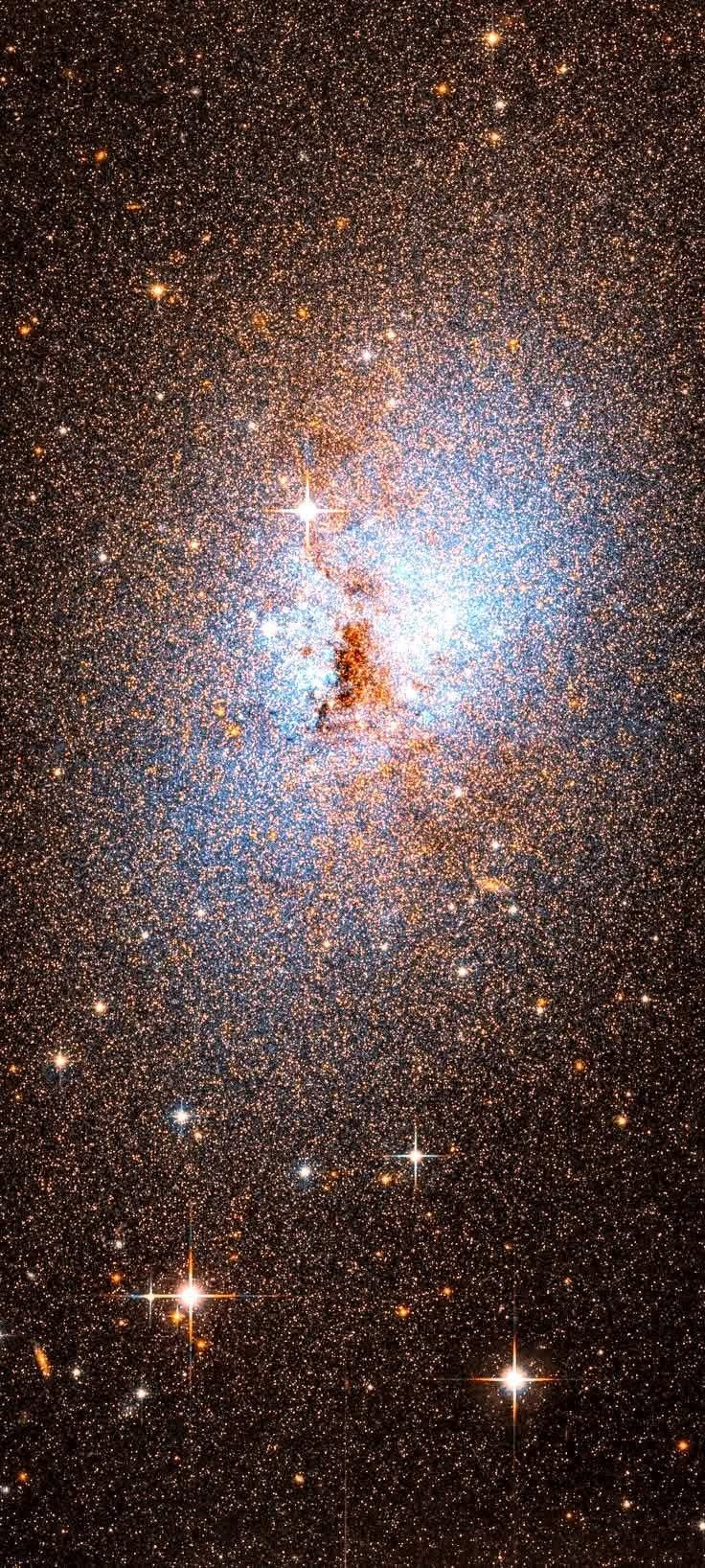
Looking at photographs of galaxies, one gets the impression that they are gas clouds, as they were actually considered before the resolution of optical instruments allowed us to identify individual sources. As in these splendid images from HST (the Hubble Space Telescope) and VISTA (the Visible and Infrared Survey Telescope for Astronomy, part of ESO’s Paranal Observatory).


Young compact star cluster E269-58 by HST

Young compact star cluster E269-58 by HST on X Black Hole channel

Cat’s Paw Nebula in Infrared

Cat’s Paw Nebula in Infrared on X Black Hole channel

please, rate this post

Here I am

After a hiatus from 2021, I’m resuming my online presence with this small collection of suggestions, seeking intellectual dialogue. Let me know what you think in the comments or via email.
Thanks

p.s. I posted with the dates of the original documents


That's me

please, rate this post

My thesis work

My thesis work (written in italian) is published in the University of Padova archive:
pdf_ita  Brussi 2025_Epistemology of time and cosmological interpretations

As an appendix to the same thesis I put a first development draft of the non-standard framework, which, after significant revisions, later became my work
link  The URD Framework.


Abstract
The aims of this study on time are first to explore its ontological meaning in the historical developments that have accompanied its interpretative evolution, and then to examine some theoretical critical issues raised by recent literature. With some original theses, some alternative explanations for the expansion of the universe are then analyzed, which the current interpretation claims to be observed experimentally, by means of a model based on the ‘specific time’ of photons as an alternative to the ‘universal time’. Furthermore, it is hypothesized a model that considers the presence of an energy density in the cosmic fluid (called aether) that interacts with the incident radiation, thus determining a redshift effect in the wavelength, or an even longer time for the same radiation to diffuse. The consistency of ‘specific time’ has been verified with Minkowski spacetime, with Einstein’s principles of special relativity, and with Friedman’s equations of cosmic dynamics. Having demonstrated the fallacy of this ‘specific time’ hypothesis, the positive conclusion is that there is no need to postulate a universal time. Once one is defined, its uniqueness or universality can be demonstrated (within the limits of the adopted models). To complement the study, possible causes of the redshift, alternative to the standard cosmological model, were analyzed. It has been taken in consideration the hypothesis that the same universe behaves like a black body, emitting a radiation (the cosmic microwave radiation) that can interact with the observed photons coming from remote sources, attenuating their energy and determining their redshift. A cross section for photons, and a model for photon-photon interactions that respects the law of conservation of energy have therefore been hypothesized. As a basis for the conjectures, direct observational evidence was considered, not interpreted by means of theories, obtaining (from the comparison with other standard candles) better distance estimates than the official ones based on Hubble’s law. This addendum is included as an Annex, believing that the same conjectures and some original models can represent a reference for future in-depth studies.

The work is written in Italian (1.8 MB):

pdf_ita  Brussi 2025_Epistemologia del tempo e interpretazioni cosmologiche

please, rate this post

What’s wrong with scientific research according to Sabine Hossenfelder

An interesting speech by Sabine Hossenfelder: “A few words on some well-known and perhaps lesser-known problems in scientific research and what others have said about them.”

In essence: “Scientific research has big problems, and it’s getting worse”.


please, rate this post

A historical photo

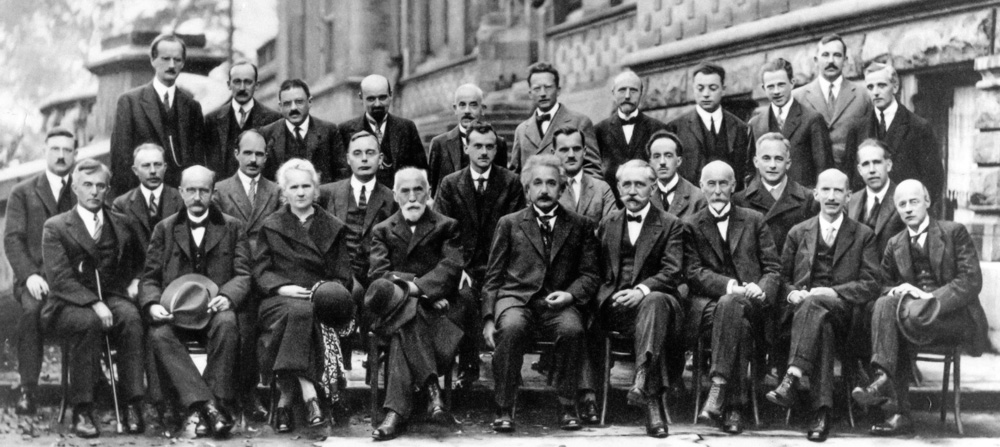
Solvay Conference on Quantum Mechanics, 1927

Solvay Conference on Quantum Mechanics, 1927 (photo by Benjamin Couprie, Institut International de Physique Solvay, Bruxelles, Belgium; I have slightly restored this photo, usually available in a lower detail level).

From behind, left to right: Auguste Piccard, Émile Henriot, Paul Ehrenfest, Édouard Herzen, Théophile de Donder, Erwin Schrödinger, Jules-Émile Verschaffelt, Wolfgang Pauli, Werner Heisenberg, Ralph Howard Fowler, Léon Brillouin, Peter Debye, Martin Knudsen, William Lawrence Bragg, Hendrik Anthony Kramers, Paul Dirac, Arthur Compton, Louis de Broglie, Max Born, Niels Bohr, Irving Langmuir, Max Planck, Marie Skłodowska Curie, Hendrik Lorentz, Albert Einstein, Paul Langevin, Charles-Eugène Guye, Charles Thomson Rees Wilson, Owen Willans Richardson

please, rate this post